President Donald Trump suggested Sunday that the United States might not need to police the Strait of Hormuz at all, even as he urged allies to step up and help secure one of the world’s most critical oil shipping routes amid the ongoing conflict with Iran.
Speaking with reporters aboard Air Force One, Trump said the U.S. has been urging several countries to send naval assets to the strategic waterway, a narrow passage in the Persian Gulf through which roughly one-fifth of the world’s traded oil typically flows. But the president acknowledged that some governments have been reluctant to get involved.
“I’m demanding that these countries come in and protect their own territory, because it is their territory,” Trump said. “It’s the place from which they get their energy, and should know and they should help us.”
The comments reflect growing frustration inside the administration as the war with Iran continues to disrupt shipping through the strait, raising concerns about global energy markets and maritime security.
Trump argued that the burden of protecting the route should not fall solely on Washington, especially given the United States’ growing domestic energy production.
“You could make the case that maybe we shouldn’t be there at all, because we don’t need it,” the president said. “We have a lot of oil.”
His remarks also included a pointed message directed at NATO allies, many of whom depend heavily on energy supplies that pass through the strait.
“In many cases, they’re NATO countries,” Trump said. “We’re always there for NATO. We’re helping them with Ukraine. It’s got an ocean in between us, but it doesn’t affect us, but we’ve helped them.”
Trump suggested that allies should reciprocate by contributing to the effort to keep the shipping lane open.
“I’d be interested to see what country wouldn’t help us with a very small endeavor, which is just keeping the strait open,” he said.
The administration had previously said it was negotiating with multiple countries about a joint effort to secure the passage and ensure commercial vessels could move safely through the region. But Trump indicated that the response so far has been mixed.
“They were contacted today and last night, but we’ve had some positive response,” the president told reporters. “We had a few that would rather not get involved.”
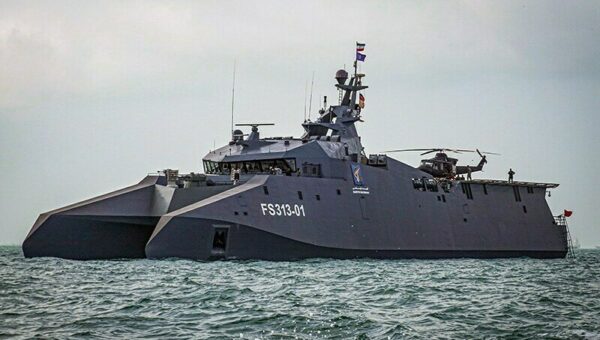
The strategic waterway has taken on heightened importance since the conflict with Iran began, as disruptions there can ripple through global energy markets. Because so much of the world’s oil moves through the strait, instability in the area can quickly affect prices and supply chains around the globe.
In an interview with the Financial Times published late Sunday, Trump elaborated on his argument that countries benefiting most from the passage should share responsibility for protecting it.
“It’s only appropriate that people who are the beneficiaries of the Strait will help to make sure that nothing bad happens there,” he told the newspaper.
The president also warned that reluctance from NATO partners could have broader consequences for the alliance.
“If there’s no response or if it’s a negative response, I think it will be very bad for the future of NATO,” Trump said.
He pointed out that some allied nations possess naval capabilities — including minesweepers and other vessels designed to clear naval mines and protect commercial shipping — that could be used to help safeguard the route.
Trump’s remarks underscore a broader debate about how much responsibility the United States should bear in protecting global trade routes during times of conflict. While the administration continues to press allies for support, the president’s comments also suggested a lingering question: whether America should continue taking the lead in policing distant waters when others depend on them just as much, if not more.