New developments in the ongoing standoff between the United States and Iran are now reportedly raising fresh questions about the stability of a fragile ceasefire, even as officials insist the situation remains under control.
During a Thursday broadcast, Fox News correspondent Jacqui Heinrich briefed anchor Bret Baier on a series of military actions that unfolded in recent hours. According to Heinrich, U.S. forces carried out strikes targeting Iran’s Kesham Port and Bandar Abbas after what officials described as unprovoked aggression.
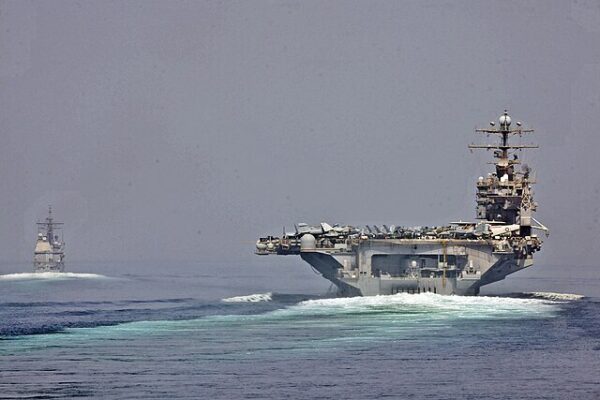
A senior U.S. official told Fox News that despite the exchange of fire, the war is not restarting and the ceasefire remains in effect. U.S. Central Command, or CENTCOM, reported that American forces intercepted Iranian attacks and responded with what were described as self-defense strikes. Iranian forces had allegedly launched drones, missiles, and small boats at multiple U.S. Navy guided-missile destroyers navigating the Strait of Hormuz.
CENTCOM stated that no U.S. assets were struck during the incident, and officials characterized Iran’s actions as unprovoked. The response from U.S. forces, they said, was necessary to protect personnel and maintain security in a critical shipping lane.
Even so, the exchange highlights the delicate nature of the ceasefire. When both sides are still trading fire—no matter how limited—it raises concerns about how long such an agreement can realistically hold. Military responses framed as defensive can still escalate tensions, particularly in a region already on edge.
Adding to the uncertainty, regional allies are reacting cautiously. Both Saudi Arabia and Kuwait temporarily closed their airspace to U.S. military operations before reopening it, citing concerns that an American plan to escort ships through the Strait of Hormuz could place them at risk. The operation, referred to as Project Freedom, now faces an unclear path forward as officials weigh next steps.
Meanwhile, Donald Trump sought to downplay the significance of the strikes. In a conversation with ABC News correspondent Rachel Scott, Trump described the U.S. response as a “love tap,” suggesting the action was measured and limited in scope.
“It’s just a love tap,” Trump said, emphasizing that the ceasefire remains intact. When asked directly whether the strikes signaled the end of the agreement, the president dismissed that notion, stating that the ceasefire is still “in effect.”
The language may be intended to reassure, but it also reflects the unusual balancing act underway—maintaining a ceasefire while engaging in military action. For observers, that tension underscores a broader reality: even limited strikes carry risks, especially in a volatile environment where miscalculation can have far-reaching consequences.
As events continue to unfold, officials are attempting to project stability while navigating an increasingly complex situation. The absence of damage to U.S. assets may offer some reassurance for now, but the underlying tensions remain unresolved.
Ultimately, the latest exchange serves as a reminder that ceasefires are often fragile by nature. When military actions continue, even under the banner of self-defense, the line between restraint and escalation can become dangerously thin—raising questions about how sustainable such arrangements truly are in the long run.
[READ MORE: Rubio Meets Pope Leo XIV at Vatican, Exchanges Symbolic Gifts Amid Rising Tensions]