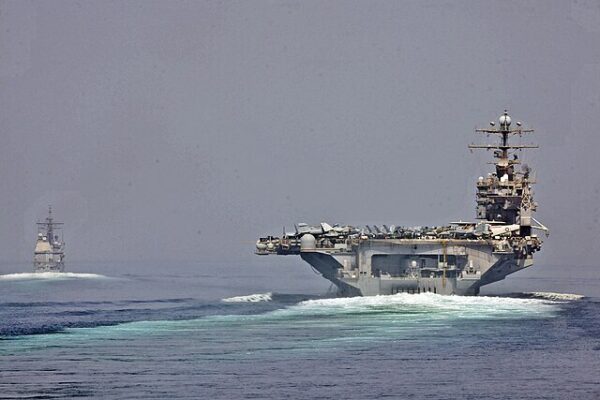
Senior officials inside the Trump administration have reportedly begun preparing for possible military scenarios involving Cuba as the White House escalates pressure on Havana’s communist government and braces for the possibility of unrest spreading across the island.
According to an exclusive report published Thursday by Axios, recent internal discussions included a “tabletop” exercise overseen by U.S. Southern Command examining potential responses should conditions inside Cuba deteriorate further. The planning comes as the administration intensifies sanctions designed to weaken the Cuban regime amid worsening economic hardship on the island.
“Everything is on the table, but no invasion is planned or imminent,” one senior administration official told Axios. “When POTUS says go, we’re ready for anything.”
Officials reportedly believe Cuba’s worsening economic crisis could spark renewed anti-government demonstrations similar to the protests that swept the country in 2021. Sources pointed specifically to rolling blackouts, food shortages and the strain of rising summer heat as conditions that could fuel public anger in the coming months.
“It’s going to be hot,” one source reportedly said. “People won’t have electricity. Food spoils without refrigeration. People get angry. They can take to the streets.”
The same source added uncertainty over how the administration might respond if unrest is met with a harsh crackdown by Cuban authorities.
“And then what happens? I can’t see the president doing nothing if there’s repression,” the source said.
Despite the increasingly aggressive posture toward Havana, officials told Axios that President Donald Trump is not seeking immediate military confrontation and instead wants to continue exhausting economic and diplomatic pressure first.
Administration insiders reportedly described the strategy as a gradual escalation campaign aimed at destabilizing the regime over time rather than triggering immediate collapse.
“The best way to describe it is ‘accelerationism.’ But we don’t want to kill off the regime just yet. There’s a method to this. It’s in stages,” one official reportedly explained.
Another official added bluntly: “We have time. The regime doesn’t.”
Secretary of State Marco Rubio has reportedly become one of the leading voices behind the administration’s hardline Cuba policy. Rubio has pushed sanctions targeting GAESA, the military-linked Cuban business conglomerate that plays a major role in the island’s economy.
President Trump also signed an executive order imposing secondary sanctions on foreign companies conducting business with the group, a move that reportedly prompted several international firms to suspend operations connected to Cuba.
The administration’s tougher approach reflects a broader effort to isolate Havana economically while increasing pressure on the communist government internally. Still, even among advisers supportive of the campaign, concerns reportedly remain about the risks of becoming entangled in another prolonged overseas conflict.
One Trump adviser warned Axios that any military intervention could quickly spiral beyond its original scope.
“The president does not want boots on the ground for more than 48 hours,” the adviser reportedly said. “It’s a quagmire in the making. This could get messy.”
The comments underscore the balancing act facing the administration as it seeks to project strength abroad while avoiding the kind of drawn-out foreign entanglements that have exhausted many Americans after decades of military conflicts overseas. Even officials advocating maximum pressure on Cuba appear aware that once military action begins, controlling the outcome becomes far more difficult.
For now, officials insist no invasion is imminent. But the reported contingency planning and increasingly severe sanctions campaign suggest the administration is preparing for the possibility that instability inside Cuba could force difficult decisions in the months ahead.
[READ MORE: Treasury Looking Into $250 Bill For America’s Birthday]