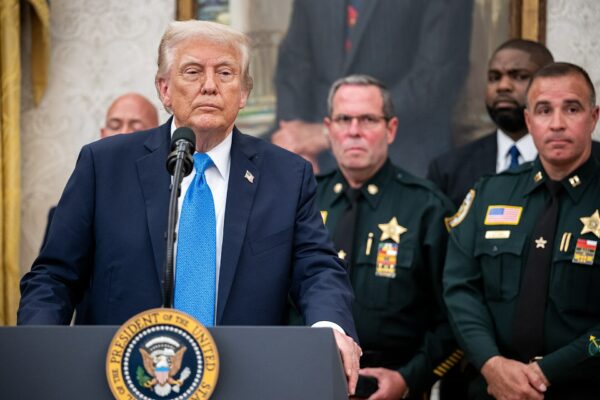
Early polling suggests President Donald Trump’s decision to launch Operation Epic Fury—the joint U.S.-Israel military campaign against Iran that began over the weekend—has consolidated support within the Republican base even as it deepens partisan divisions nationwide. The operation, aimed at crippling Iran’s nuclear infrastructure, ballistic missile programs, and related military capabilities, has produced sharply polarized reactions across the American electorate, writes The Daily Wire.
A CBS/YouGov survey conducted March 2–3 illustrates the split clearly. Among Republicans, 85 percent support the military action, while just 15 percent oppose it. Democrats break almost entirely the other way, with 90 percent opposed and only 10 percent supportive. Independents tilt against the operation as well, with 63 percent opposed and 37 percent in favor.
Other surveys tell a similar story. A Washington Post poll conducted March 1 found 81 percent of Republicans approving of the strikes and 12 percent disapproving. Democrats opposed the action by an 87 percent to 9 percent margin. Independents were again divided but leaned negative, with 59 percent opposed and 28 percent supportive.
A Reuters/Ipsos survey reached nearly identical conclusions. In that poll, 82 percent of Republicans approved of the campaign while 18 percent disapproved. Democratic opposition registered even higher, at 95 percent, and independents opposed the action by a margin of 67 percent to 29 percent.
An InsiderAdvantage survey conducted in late February—before the strikes intensified—also recorded strong Republican backing, with roughly 79 percent in favor and 12 percent opposed. That poll suggested slightly higher national support at the time, reflecting a period when public opinion was still forming around the prospect of military action.
The poll also highlighted how perceptions of Iran shape public attitudes toward the conflict. Sixty-one percent of Americans described Iran as a national security threat, and military veterans expressed greater willingness than the public at large to back the campaign. Among veterans surveyed, 59 percent supported the strikes while 39 percent opposed them.
Some critics have speculated that the Iran campaign might fracture Trump’s political coalition, particularly among segments of the Republican electorate wary of prolonged overseas conflicts. Thus far, however, the polling data shows little evidence of a major break within the GOP.
Across multiple surveys, Republican opposition rarely rises above the mid-teens and generally falls below 18 percent. Dissenting voices certainly exist and have received significant attention in political commentary and media coverage. Yet they appear to represent a relatively narrow faction rather than a broad rupture within Trump’s core supporters.
For the moment, the political landscape surrounding Operation Epic Fury appears defined less by intra-party division than by a widening partisan gulf. Republicans remain strongly aligned behind the president’s decision, while Democrats overwhelmingly reject it and independents remain skeptical.
Meanwhile, the military campaign itself continues. Reports indicate that U.S. forces have conducted extensive strikes on Iranian targets since the opening salvo, with the administration portraying the operation as a necessary step toward dismantling Tehran’s nuclear ambitions and restoring long-term stability in the region.