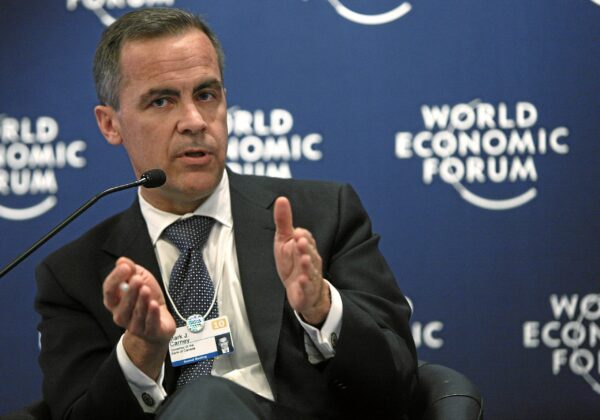
Canadian Prime Minister Mark Carney is signaling a major shift in how Canada views its longtime economic partnership with the United States, arguing that what was once a cornerstone of strength has increasingly become a vulnerability.
In a 10-minute video address released Sunday, Carney laid out a stark assessment of a changing global landscape, saying Canada can no longer afford to depend so heavily on its southern neighbor. While the two nations have historically shared deep economic ties, Carney warned that shifting U.S. trade policies under President Donald Trump have altered the equation.
“The world is more dangerous and divided,” Carney said, pointing to rising tariffs from the United States that he described as reaching levels not seen since the Great Depression. In his view, these changes have turned Canada’s close relationship with the U.S. into a liability that must now be addressed.
Carney emphasized that American tariffs have already taken a toll on Canadian workers, particularly in the auto and steel sectors. He added that businesses are hesitating to invest, citing a climate of uncertainty that has made long-term planning more difficult. Rather than wait for conditions to improve, Carney said his government is moving to diversify trade relationships and attract new investment from other countries.
The prime minister also acknowledged growing frustration among Canadians over Trump’s past remarks suggesting Canada could become the “51st state,” comments that have fueled tensions between the two allies. While there was no immediate response from the White House to Carney’s latest address, the broader back-and-forth underscores a relationship that appears increasingly strained.
At the same time, Carney made clear that his administration intends to be transparent about the challenges ahead. “Security can’t be achieved by ignoring the obvious,” he said, promising regular updates as Canada works to adjust its economic strategy. His message was direct: the country must prepare for a future in which it cannot rely on a single dominant partner.
This is not the first time Carney has warned about shifting global dynamics. During a speech earlier this year at the World Economic Forum in Davos, Switzerland, he criticized economic pressure tactics by major powers, drawing praise internationally but also a sharp response from Trump. The president pushed back at the time, saying Canada’s prosperity is closely tied to the United States.
Carney’s latest remarks come on the heels of a political victory at home, where he recently secured a majority government following special election wins. Still, pressure is mounting from opposition Conservatives, who are urging him to deliver on a promised trade deal with the U.S. A scheduled July review of the North American Free Trade Agreement adds further urgency to the situation.
Looking ahead, Carney outlined a plan focused on strengthening Canada internally. He highlighted efforts to boost investment, expand clean energy capacity, lower taxes, and improve housing affordability. He also pointed to increased defense spending, signaling a broader push to ensure the country can stand on its own in an uncertain world.
“We have to take care of ourselves because we can’t rely on one foreign partner,” Carney said. “Hope isn’t a plan and nostalgia is not a strategy.”
While Canada has historically stood shoulder to shoulder with the United States in conflicts such as Afghanistan and the two World Wars, Carney suggested the current moment calls for a recalibration. His remarks reflect a growing recognition that alliances, while enduring, do not eliminate the need for self-reliance—especially in a world where economic and geopolitical tensions continue to rise.
[READ MORE: Fetterman Breaks With Democrats, Slams Party’s Response to Iran Conflict]