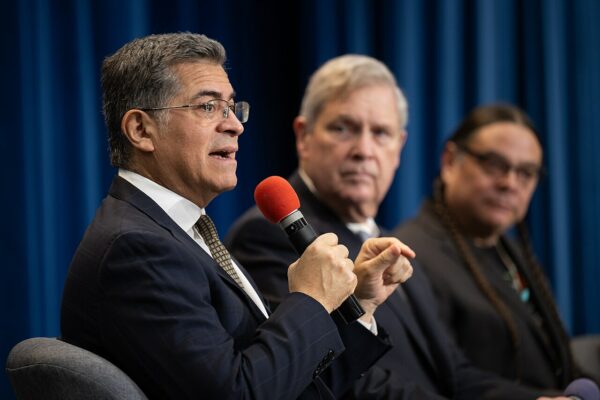
As California voters prepare to choose a successor to Gov. Gavin Newsom, Democratic gubernatorial frontrunner Xavier Becerra is drawing attention by taking a more cautious stance on one of the state’s signature climate policies.
Becerra, who currently leads polling ahead of the June 2 primary, has stopped short of fully endorsing California’s plan to phase out sales of new gas-powered vehicles by 2035. His comments mark a notable departure from a policy that has become a cornerstone of California’s long-term environmental agenda and a defining part of Newsom’s legacy.
In responses to a POLITICO survey, Becerra argued that the transition away from gasoline-powered vehicles should be driven by practical considerations rather than fixed timelines.
“California should transition from gas-powered vehicles when it makes sense — when infrastructure and affordability are there for California families,” Becerra wrote.
The remarks reflect a growing focus on affordability concerns in California politics, where rising costs continue to weigh heavily on many households. While climate goals remain a major issue for Democratic voters, questions about whether families can realistically afford the transition to electric vehicles have become increasingly difficult to ignore.
In a subsequent interview, Becerra expanded on his position, saying the success of California’s shift away from fossil fuels depends on several factors that remain uncertain. He pointed to the need for federal support, cooperation from automakers, and the overall financial condition of the state.
“We’re not going to live in a world that’s make-believe,” Becerra said. He added that anyone claiming to know exactly how those factors will unfold is making promises that cannot be guaranteed.
The position places Becerra at odds with Newsom’s 2020 mandate directing regulators to tighten emissions standards and accelerate California’s move toward electric vehicles. While the governor has adjusted some climate-related goals over time, he has continued to defend the 2035 target as a central part of the state’s environmental strategy.
Newsom recently reaffirmed that commitment after the Trump administration eliminated the federal $7,500 tax credit for electric vehicle purchases.
“We won’t let this illegal action by Trump and Republicans in the pockets of polluters stand in the way of commonsense policy to clean our air, protect the health of our kids, and compete on the global stage,” Newsom said.
Political observers say Becerra’s comments may reflect an effort to leave room for flexibility as Californians grapple with economic pressures.
Democratic consultant Andrew Acosta told POLITICO that a strict phaseout could create challenges for consumers who are not financially prepared to purchase electric vehicles.
“It seems like Becerra is trying to make sure he has wiggle room on these affordability issues,” Acosta said.
The stance has also become a point of contention in the governor’s race. Billionaire climate activist and Democratic rival Tom Steyer has seized on Becerra’s comments in the campaign’s final stretch, criticizing his acceptance of oil industry donations and branding him “Big Oil Becerra.”
A spokesperson for Steyer said the candidate remains committed to California’s climate goals and would seek to strengthen support for electric vehicle adoption by tripling the state’s EV tax credit to make the technology more accessible to working- and middle-class families.
Meanwhile, environmental advocates have voiced concerns that any retreat from the 2035 target could undermine California’s reputation as a leader on climate policy.
Dan Sperling, director emeritus of the UC Davis Institute of Transportation Studies and a former member of the California Air Resources Board, said Becerra’s position was disappointing.
Others, however, argued that the debate highlights the practical challenges facing whoever becomes California’s next governor.
Katelyn Roedner Sutter said goals alone are not enough to guarantee results.
“I think it’s really important to have a goal, but a goal doesn’t magically make things happen,” she said.
Sutter argued that achieving California’s objectives will ultimately require funding, policy development, and broad political support. As the gubernatorial race enters its final days, Becerra’s comments have brought renewed attention to the tension between ambitious climate targets and the economic realities many Californians face every day.