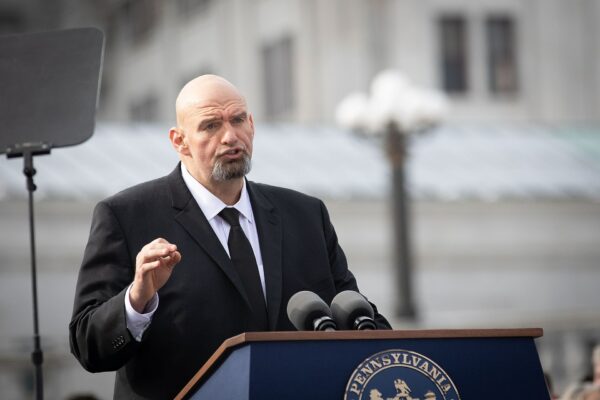
Sen. John Fetterman is sounding the alarm over what he calls a deeply troubling response from members of his own party to the ongoing military conflict with Iran, delivering a blunt critique that underscores widening divisions among Democrats.
In a recent interview with video journalist Nicholas Ballasy, Fetterman said he has been “very disappointed” in how Democrats have reacted to the situation. His frustration went beyond policy disagreements, touching on what he described as an alarming tone from some voices within the party.
“It seems like people are almost rooting for Iran. It’s crazy,” Fetterman said, suggesting that opposition to President Donald Trump has, in some cases, led to reactions that he finds difficult to reconcile.
The Pennsylvania Democrat pointed to past remarks from Graham Platner as an example of what he sees as a broader problem. According to a report cited in the interview, Platner had commented on a 2014 video of a Hamas raid on Israeli soldiers, describing it at the time as “an all around well executed and successful small unit raid.”
Fetterman referenced those comments to illustrate his concern about the direction of political discourse. “That’s the kind of what our party’s becoming,” he said, expressing dismay at what he views as a shift in tone that he believes crosses a line.
At the same time, Fetterman’s own voting record places him at odds with many of his Democratic colleagues. He has been the only Senate Democrat to consistently oppose efforts to limit the administration’s military authority in the conflict. Specifically, he voted against a war powers resolution that would have prohibited the continuation of hostilities with Iran.
He also broke with a large portion of his party last week by voting against two resolutions introduced by Sen. Bernie Sanders. Those measures sought to block the sale of bulldozers and heavy bombs to Israel’s military.
The votes revealed significant divisions within the Democratic caucus. Forty Democratic senators supported a resolution to halt a $295 million bulldozer sale to Israel, while 36 backed a separate measure to block the transfer of $1.2 million in 1,000-pound bombs.
Fetterman’s stance highlights a complicated moment for lawmakers navigating both foreign policy and domestic political pressures. His criticism suggests that, in his view, partisan opposition risks clouding judgment at a time when the stakes are high.
At the same time, the broader debate reflects the uneasy balance between supporting allies, managing military engagements, and responding to voter concerns about prolonged conflict. Even as disagreements sharpen in Washington, the underlying question remains unresolved: how to address international threats without allowing divisions at home to deepen—or the conflict abroad to spiral further.
[READ MORE: Psaki Dismisses 25th Amendment Talk as Democrats Face Reality Check]