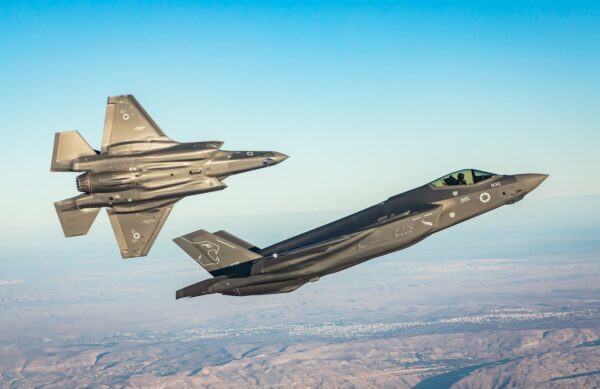
Deep partisan divisions in Washington over how to respond to President Donald Trump’s military campaign against Iran are likely to leave the president with broad authority to continue missile strikes and bombing operations for the foreseeable future.
A bipartisan resolution under the War Powers Act aimed at halting further U.S. military action against Iran is scheduled to receive a vote in the Senate on Wednesday. But the measure appears unlikely to gain enough support to pass, as it has attracted only a single Republican co-sponsor: Sen. Rand Paul of Kentucky.
Most Republican lawmakers have instead rallied around the argument that the president already has sufficient authority under the Constitution to carry out military strikes against Iran. Many GOP senators point out that presidents from both parties have historically conducted bombing campaigns without first receiving approval from Congress.
Senate Majority Leader John Thune of South Dakota was emphatic when asked whether Trump would need congressional authorization to continue military operations beyond the 60-day window outlined in the 1973 War Powers Act.
“No,” Thune said following the weekly Senate Republican policy lunch.
“I think the president has the authority that he needs to conduct the activities, the operations that are currently underway there,” he added.
Thune acknowledged that debate over the War Powers Act has persisted for decades but said the president’s actions are justified given the broader national security concerns involved.
“As you know, there’s a lot of controversy around, questions around the War Powers Act,” Thune said. “But I think the president is acting in the best interests of the nation and our national security interests by ensuring that he’s protecting Americans and American bases and installations in the region as well as those of our allies.”
Other Republicans echoed that view, emphasizing that the Constitution leaves room for both the president and Congress to play a role in decisions involving military force.
Sen. John Kennedy of Louisiana, a member of the Senate Judiciary Committee, said the founders intentionally left the division of authority somewhat unclear.
“I think a fair-minded person will conclude that our founders intended to give both Congress and the president a role, and I happen to believe they left it intentionally vague,” Kennedy said.
Kennedy also noted that many presidents have ordered military strikes against adversaries without facing legal challenges that prevented them from doing so.
“I’m not aware of any instance where a president — and there have been many of them, Republican and Democrat — has bombed an adversary that is trying to hurt the United States,” he said. “I’m not aware of any Supreme Court case that says the president cannot do that.”
Republicans broadly argue that the joint U.S.-Israeli operation against Iran is justified given Tehran’s decades-long support for terrorism, its extensive missile arsenal, and its pursuit of a nuclear weapon.
Democrats, however, have sharply criticized the strikes, arguing that the president lacks a clear strategy for ending the conflict. Some Democrats have also claimed that U.S. forces in the region did not face an immediate threat until Israel and the United States launched what they describe as preemptive attacks.
Senate Democratic Leader Chuck Schumer of New York said recent polling indicates the public is skeptical of the conflict.
“If the case for war were strong, it would be consistent,” Schumer said. “Instead, the rationales change by the hour: Regime change, nuclear weapons, missiles, defense, preemptive — which is it? When the justification keeps shifting, the strategy is missing.”
A Reuters/Ipsos poll of 1,282 U.S. adults found that 27 percent of respondents approved of the strikes against Iran, while 43 percent disapproved and 29 percent said they were unsure.
Some lawmakers have raised additional questions about the administration’s explanation for the strikes.
Sen. Angus King of Maine, an independent who caucuses with Democrats, said during an Armed Services Committee hearing that he was troubled by comments from Secretary of State Marco Rubio suggesting the United States acted in part because Israel was planning to strike Iran and American forces could face retaliation.
“Have we now delegated the most solemn decision that can be made in our society, the decision to go to war, to another country?” King asked during the hearing.
Sen. Tim Kaine of Virginia, the lead Democratic sponsor of the war powers resolution, argued that the law allows the president to deploy forces for only 60 days in defensive actions and said the current operation does not meet that standard.
“Haven’t we learned anything from 25 years of the wars in the Middle East?” Kaine said, pointing to the thousands of U.S. troops and contractors killed or injured during those conflicts.
Despite those arguments, Democrats have struggled to gain support from Republicans.
Moderate Republican senators such as Susan Collins of Maine and Lisa Murkowski of Alaska have declined to say how they will vote on the measure. Other Republicans who previously supported similar war powers efforts — including Sens. Todd Young of Indiana and Josh Hawley of Missouri — are expected to oppose the Iran resolution.
Hawley said the administration appears to be complying with the War Powers Act requirement that Congress be notified within 48 hours of military action.
“The president has 60 days under the War Powers Act to conduct operations before having to come back to Congress,” Hawley said, adding that congressional authorization would likely be required only if ground troops were committed.
Several other Republicans who supported a war powers resolution related to Iran during Trump’s first term have also declined to back the current proposal.
Meanwhile, Democrats — with the notable exception of Sen. John Fetterman of Pennsylvania, who has praised the strikes — are expected to vote overwhelmingly in favor of limiting the president’s ability to continue the military campaign.
[READ MORE: Trump Looking Into Boycotting Spain]