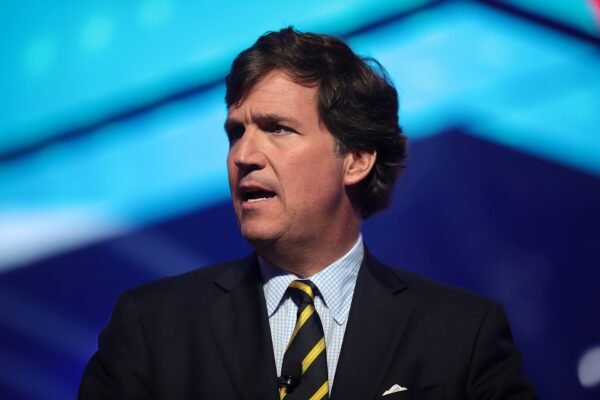
Former Fox News host Tucker Carlson issued a striking apology Monday for his past support of President Donald Trump, acknowledging what he described as a personal role in helping elevate a presidency he now openly questions.
Speaking during an interview with his brother, Buckley Carlson, on his podcast, Carlson reflected on their shared involvement in Trump’s rise. Buckley Carlson, who previously worked as a speechwriter for the president, agreed as Tucker Carlson described their contributions as part of a broader movement that helped shape current events.
“You wrote speeches for him, I campaigned for him,” Carlson said, emphasizing that their actions—along with those of “millions of people”—played a part in what is unfolding now. He argued that simply distancing oneself after the fact is not enough, suggesting that supporters bear some level of responsibility, even if their contributions were “small” in isolation.
Carlson went further, framing the moment as one of personal reckoning. He said he expects to be “tormented” by his decision for a long time and offered a direct apology to those he believes he may have misled. While he maintained that any misjudgment was unintentional, his remarks carried a tone of reflection that stands in contrast to his earlier advocacy.
The comments come amid a growing and highly public rift between Carlson and Trump. Once considered allies, the two have increasingly clashed in recent months, particularly as Carlson has become more critical of the administration’s actions. His criticism has touched on several issues, including the handling of the Epstein files and the president’s approach to the conflict with Iran—topics that have stirred debate among conservative audiences.
Trump has responded forcefully. In a series of posts on Truth Social, the president labeled Carlson “a Low IQ person,” “stupid,” and “highly overrated,” while also taking aim at other former allies such as Megyn Kelly, Alex Jones, and Candace Owens. The rhetoric highlights how quickly political alliances can shift, particularly in an environment shaped by high-stakes decisions and public pressure.
Carlson, for his part, responded to the attacks with a mix of criticism and sympathy. He said he still “likes” Trump but expressed concern that the president is constrained by forces beyond his control, describing the situation as “awful to watch.” His comments suggest a belief that leadership decisions—especially in times of conflict—can be influenced by pressures that are not always visible to the public.
The fallout has extended beyond rhetoric. Buckley Carlson’s son, who shares his name, recently stepped down from his role as deputy press secretary to Vice President JD Vance. His departure came shortly after Trump’s repeated public attacks on his father, underscoring how political disputes can ripple outward into personal and professional spheres.
Carlson’s apology stands out in a political climate where public figures rarely revisit past endorsements with such candor. At the same time, his remarks reflect a broader unease about the consequences of political choices made during moments of urgency, particularly when those choices intersect with matters of war and national policy.
While Carlson stopped short of offering a detailed critique of specific decisions, his comments hint at the weight such decisions can carry over time. As debates over leadership and direction continue, his admission serves as a reminder that even strong political alliances can fracture—and that the outcomes of those alliances may leave lasting impressions on those who helped shape them.