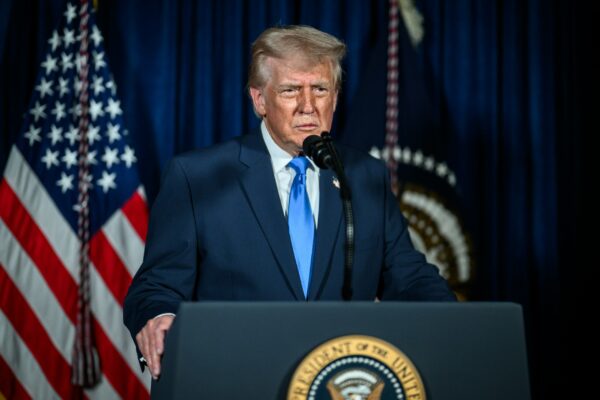
President Donald Trump on Tuesday delivered a sharp rebuke of The New York Times, accusing the publication of misleading its readers about the state of the ongoing conflict with Iran while also defending his administration’s actions at home and abroad.
Speaking during a radio interview with Sid Rosenberg on ABC 770 AM, Trump argued that the paper’s reporting paints a distorted picture of the battlefield. According to the president, Iran’s military capabilities have been effectively dismantled, even as he claims the average reader of The Times would come away with the opposite impression.
Trump asserted that Iran’s naval forces had been wiped out, claiming that all 159 ships present at the start of the war are now at the bottom of the sea. He added that the country no longer has functioning radar or other key military infrastructure. Despite those claims, Trump said media coverage—particularly from The Times—suggests Iran is “doing fantastically,” a portrayal he dismissed as detached from reality.
“They are militarily defeated,” Trump said, adding that Iran itself may not yet fully recognize the extent of its losses. He went on to argue that media narratives can shape public perception in ways that obscure the facts on the ground, drawing a comparison to coverage surrounding the 2024 election.
Throughout the interview, Rosenberg could be heard laughing as the president criticized the paper’s credibility. Trump expressed frustration that an outlet he believes should be highly respected has, in his view, lost the trust of its audience.
“The credibility has gone down so low,” Trump said, while also noting that he would prefer to see the publication regain its standing.
The president’s comments followed a late-night social media post in which he again targeted The Times, this time over a report detailing the rising cost of renovations to the Lincoln Memorial Reflecting Pool. The project, now estimated at $13.1 million, has drawn attention for exceeding earlier projections.
Trump has also pushed back against reporting that his administration awarded a “no-bid” contract to a company constructing a new White House ballroom, accusing the paper of attempting to damage his image.
On foreign policy, Trump expressed confidence that Iran will ultimately surrender its “nuclear dust” to the United States, signaling his belief that the conflict will conclude on terms favorable to Washington. Still, even as he described overwhelming military success, his remarks underscored the high-stakes nature of the confrontation—one where messaging, as much as battlefield outcomes, appears to play a central role.
Turning to domestic politics, Trump highlighted his ongoing criticism of Democrats, touting his newly coined nickname for the party. He also accused them of opposing the SAVE America Act because of provisions requiring proof of citizenship to vote.
“The only reason they won’t talk about voter identification is because they want to cheat,” Trump said.
The interview, punctuated by humor and sharp rhetoric, offered a glimpse into Trump’s broader strategy: challenging media narratives, emphasizing perceived victories abroad, and keeping a firm focus on political battles at home—even as the realities of conflict abroad continue to loom in the background.
[READ MORE: House Ethics Panel Expands Probe Into Rep. Cory Mills as Allegations Draw Scrutiny]