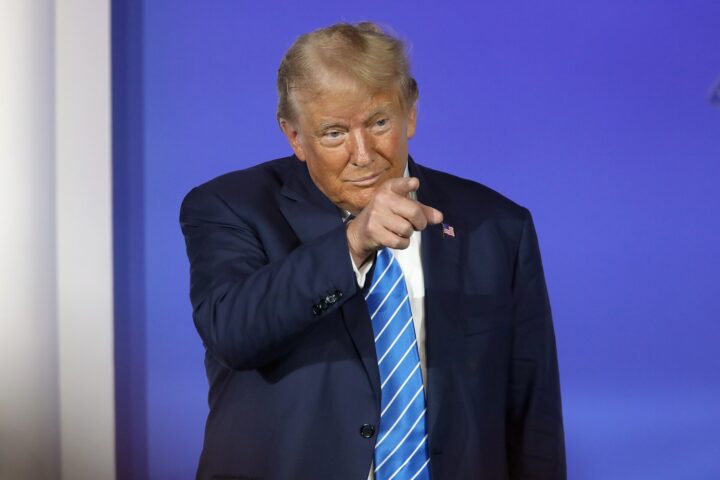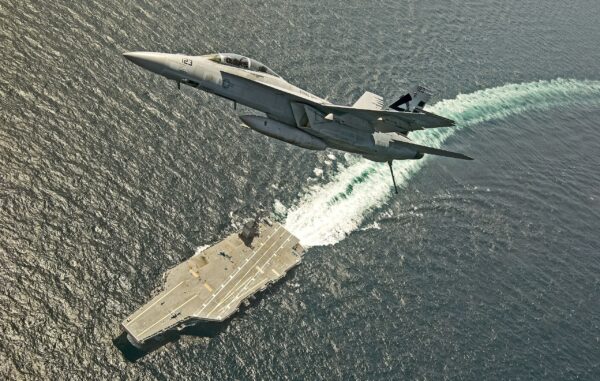
President Donald Trump on Thursday announced a forceful directive to the U.S. military, ordering the Navy to “shoot and kill” any boats found laying mines in the Strait of Hormuz, a critical global shipping lane now at the center of heightened tensions.
In a post on Truth Social, Trump made clear that his administration is taking a hardline approach to securing the waterway. “There is to be no hesitation,” he wrote, emphasizing that even small boats engaged in mine-laying activity would be treated as immediate threats. At the same time, he highlighted ongoing efforts to remove existing mines, stating that U.S. “mine sweepers” are actively working in the strait and that he has ordered those operations to increase significantly.
The directive comes as uncertainty continues to surround the future of the Strait of Hormuz, a vital passage that typically handles about one-fifth of the world’s oil and gas shipments. While Trump earlier extended a ceasefire with Iran indefinitely, the blockade in the region remains firmly in place, contributing to reduced tanker traffic and elevated oil prices.
According to a report from The Washington Post, Pentagon officials have told Congress that clearing the mines from the strait could take as long as six months, underscoring the scale of the challenge facing U.S. forces. The prolonged timeline raises concerns not only about economic disruption but also about how long the region may remain under such intense military pressure.
U.S. Central Command added another layer to the situation, noting in a social media post that American forces recently directed 31 vessels to turn around or return to port as part of the ongoing blockade against Iran. The move signals a tightening grip over the waterway, as the United States seeks to assert control over maritime traffic in the area.
Trump, in a follow-up post, claimed that Iran is struggling with internal divisions, describing what he called “infighting” between factions he labeled as “Hardliners” and “Moderates.” He asserted that the United States currently has “total control” over the Strait of Hormuz, stating that no ship can enter or leave without approval from the U.S. Navy. The president described the strait as effectively “sealed up tight” until Iran agrees to a deal.
The White House has indicated that there is no set deadline for Iran to present a new peace proposal, leaving the situation open-ended. For now, the administration appears focused on maintaining pressure while continuing military operations in the region.
Supporters of the president’s approach may see the decisive posture as a necessary step to protect a critical artery of global commerce and to deter further threats. Yet the developments also highlight the difficult balance between strength and escalation. As mine-clearing operations stretch on and military directives grow more aggressive, the situation serves as a reminder that even efforts aimed at securing peace can deepen the risks tied to prolonged conflict.
With the strait’s future uncertain and global markets watching closely, the coming weeks could prove pivotal—not only for regional stability, but for how far the United States is willing to go in asserting control in one of the world’s most strategically important waterways.