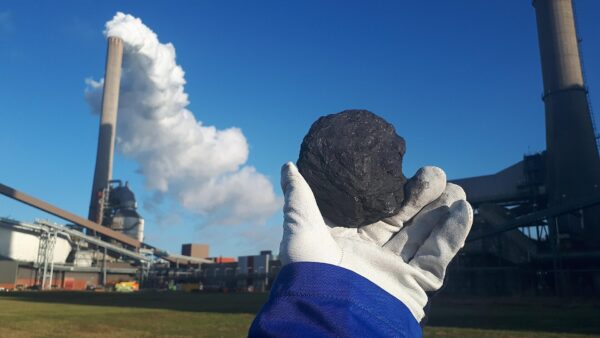
President Donald Trump announced Thursday that his administration is invoking the Defense Production Act to direct nearly $700 million toward coal-fired power plants, mines, and related infrastructure, arguing that the investment is needed to protect the nation’s electric grid and meet growing demand for reliable energy.
The initiative will support 13 existing coal plants across 10 states, fund the construction of two new facilities, restart a shuttered Maryland plant, and assist dozens of coal mines. The administration said the broader package is intended to preserve domestic energy production, protect jobs, and reduce electricity costs as artificial intelligence data centers and other industries place new strains on the grid.
.@POTUS: "Today, we're officially invoking the Defense Production Act to save 13 coal plants in West Virginia, Kentucky, North Carolina, Indiana, Tennessee, Arizona, Arkansas, Oklahoma, North Dakota, and Wisconsin." https://t.co/Sdmn0zyK3u pic.twitter.com/qcIjHyHHC1
— Rapid Response 47 (@RapidResponse47) June 4, 2026
“Today, we’re officially invoking the Defense Production Act to save 13 coal plants in West Virginia, Kentucky, North Carolina, Indiana, Tennessee, Arizona, Arkansas, Oklahoma, North Dakota, and Wisconsin,” Trump said during an Oval Office announcement.
He described the facilities as “incredible plants” that remain highly productive sources of electricity.
The announcement expands on actions Trump took in April, when he issued presidential determinations under the Defense Production Act declaring coal supply chains and baseload power generation critical to national defense, writes Reuters. The 1950 law, originally enacted to mobilize industry during wartime, gives the federal government broad authority to prioritize materials and infrastructure considered essential to national security.
Administration officials have argued that the nation’s electric grid faces mounting pressure as data centers, manufacturing facilities, and other energy-intensive industries expand. Unlike intermittent sources such as wind and solar, coal plants can generate electricity around the clock, making them a key component of the administration’s push for more dependable domestic energy production.
Approximately $425 million of the funding will be used to upgrade and extend the operating lives of the 13 existing coal plants, preserving more than 14 gigawatts of generating capacity. The package will also support the construction of two new coal plants in Alaska and West Virginia, which would be the first new facilities of their kind built in the United States since 2013.
Additional funding will help restart a shuttered coal plant in Maryland, develop a coal export terminal in Oakland, California, and assist 42 mines across the country.
The administration estimates that the initiative will protect or create more than 14,000 jobs and preserve enough electricity-generating capacity to power millions of homes. Officials also project that the investments could produce approximately $50 billion in consumer electricity savings over time.
Trump said the policy would help with “bringing down the price of energy and the cost of living,” while again promoting what he called “clean, beautiful coal.”
The coal industry has faced years of plant closures driven by federal regulations, competition from natural gas, and the growth of renewable energy. Industry advocates, including the National Mining Association, have warned that the continued retirement of coal plants could make the electric grid more vulnerable, particularly as electricity demand rises.
Environmental groups and other critics have opposed the administration’s approach, arguing that expanded coal production could increase greenhouse gas emissions and slow the transition toward cleaner energy sources. Some have also questioned whether the Defense Production Act should be used to direct taxpayer funds toward an industry that has declined in recent decades.
Energy Secretary Chris Wright has issued several emergency orders in recent months aimed at keeping power plants online and preventing reliability problems, particularly in the Midwest and other regions facing tighter electricity supplies.
The latest investment reflects the administration’s broader energy strategy, which emphasizes expanded domestic production, lower prices, and grid reliability. The Department of Energy is expected to release additional details about the individual plants and the timeline for distributing the funds.