President Donald Trump has ordered the U.S. Navy to abandon electromagnetic aircraft launch systems on its newest aircraft carriers and return to traditional steam-powered catapults, a shift defense experts warn could add billions of dollars in costs and delay ships already under construction, according to some critics.
In a memo issued Thursday, Trump directed the Navy to equip Ford-class carriers, including the future USS Doris Miller, with steam catapults and hydraulic systems instead of the Electromagnetic Aircraft Launch System, known as EMALS.
“The Department of War shall restore both capacity and competition to the maritime industrial base as it expands our naval force structure,” Trump said in the memo, using the administration’s preferred name for the Pentagon. “It will use proven, reliable and affordable technologies and ship designs, as well as award contracts that enable purchases from foreign suppliers in the near term while simultaneously incentivizing investment in America’s shipbuilding industrial base, consistent with other major equipment purchases such as icebreakers.”
The order reverses the Navy’s yearslong move toward electromagnetic launch technology, writes The Hill, already installed aboard the USS Gerald R. Ford, the service’s newest and largest aircraft carrier.
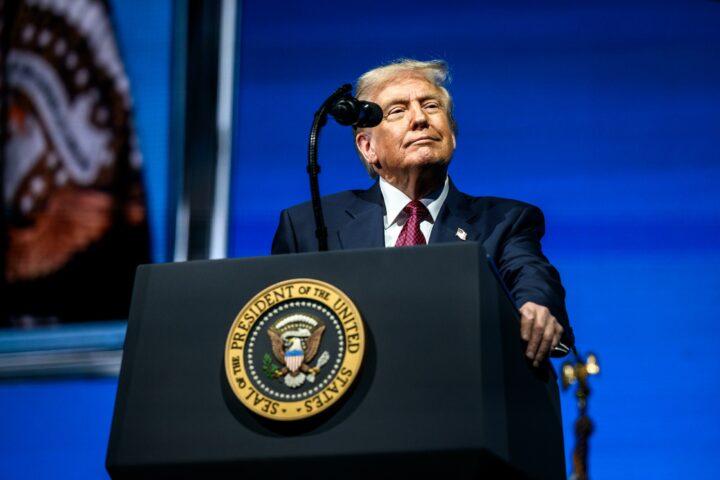
Trump has repeatedly criticized the system. Speaking at a defense summit in Pennsylvania last month, he said: “Billions of dollars more they spent on electric catapults, and they’re not good.”
General Atomics, the California company with a $1.2 billion contract to supply EMALS and Advanced Arresting Gear for the Doris Miller, warned that changing systems midway through production could create major disruptions.
“With nearly 50 percent of production complete, changing course now would introduce significant cost, schedule and integration risks,” the firm said in a statement. “The decision will have broader implications for carrier readiness, national security and U.S. technological superiority, potentially creating opportunities for adversaries to close the capability gap. It also comes at a time when strengthening the U.S. supplier industrial base is a national priority, making workforce stability, production capacity and the ability to sustain critical technologies more important than ever.”
Retired Rear Adm. Mark Montgomery, a senior fellow at the Foundation for Defense of Democracies and former commander of Carrier Strike Group 5, called the reversal “illogical, inefficient and a waste of money.”
Montgomery said EMALS systems “reduce wear and tear on aircraft by providing smoother acceleration” while requiring less maintenance and manpower than steam systems.
Bryan Clark, a senior fellow at the Hudson Institute, called Trump’s broader shipbuilding memo a “mixed bag” and warned that converting the carriers back to steam would be costly.
Installing steam catapults and hydraulic gear “will make them less capable and more expensive,” Clark said. “The Navy is saving about $100M a year on the Ford because it requires fewer people and less maintenance. Redesigning the carriers to replumb them for steam piping to the catapults will take multiple years and cost billions of dollars.”
Steam catapult production ended roughly two decades ago, Clark added, meaning the Navy would also have to restore the industrial capacity needed to manufacture the systems.
The USS Gerald R. Ford, which cost more than $13 billion, suffered repeated problems with elevators, arresting gear and other new technology during construction and testing. The carrier is currently in Hampton Roads, Virginia, for repairs following an 11-month deployment.
The Navy reported earlier this year that EMALS and the Ford’s advanced arresting gear appeared to improve aircraft sortie rates compared with older Nimitz-class carriers.
Trump’s memo also directs Defense Secretary Pete Hegseth to establish a fifth public naval shipyard to expand repair capacity for carriers and submarines. The Navy currently operates four public shipyards in Hawaii, Washington, Virginia and Maine.
Clark praised that portion of the plan, saying a new yard financed with private capital would be “a better use of private money than creating more new autonomous system companies.”
The memo also calls for greater investment in the domestic shipbuilding industry, limited foreign construction paired with American workforce training, creation of a Component Repair Center for submarine parts and a review and reorganization of Naval Sea Systems Command.