Iran’s military has threatened to strike U.S. forces that approach the Strait of Hormuz, escalating tensions after President Donald Trump said American personnel would begin guiding vessels through the strategic waterway this week.
Trump described the planned operation as a humanitarian effort to assist ships, crews, and cargo stranded for weeks amid the standoff, but offered limited detail on how the mission would be carried out or the risks involved.
Maj. Gen. Ali Abdollahi, commander of Iran’s Khatam al-Anbiya military headquarters, issued the warning in remarks carried by state media Monday, saying Iran would target any foreign military force—specifically the United States—that attempts to enter or operate near the strait, according to The Washington Post.
A U.S.-led maritime coordination body, the Joint Maritime Information Center, announced the creation of an “enhanced security area” and advised commercial vessels to consider transiting through Oman’s territorial waters rather than standard shipping lanes. Officials did not provide specifics on what the enhanced measures would entail.
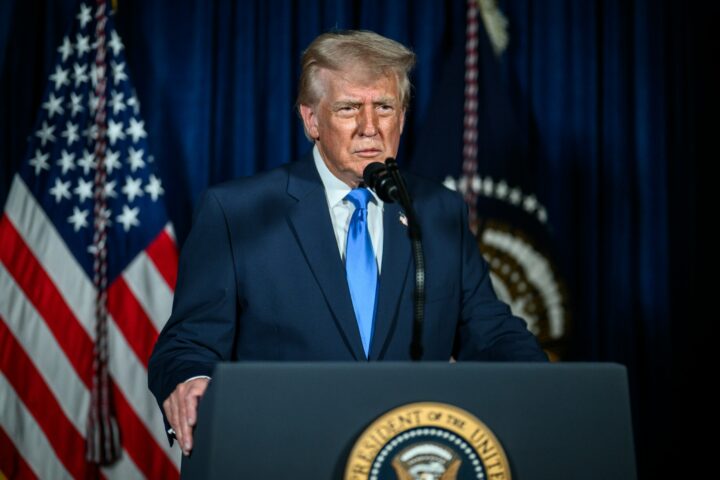
In a Truth Social post Sunday, Trump did not elaborate on operational plans or the number of vessels involved, but framed the initiative as one designed “to free up people, companies, and Countries that have done absolutely nothing wrong — They are victims of circumstance.” He added that U.S. representatives were engaged in “very positive discussions” with Iranian officials aimed at formally ending hostilities.
U.S. Central Command later expressed support for “Project Freedom,” an effort intended to restore commercial access through the strait, though it did not outline specific military steps. A related initiative, known as the Maritime Freedom Construct, seeks support from allied nations to address gaps in maritime security.
The Strait of Hormuz, a narrow passage off Iran’s southern coast that handles a significant share of global energy shipments, has effectively been closed to unauthorized traffic. Iran has barred vessels without its approval, while the United States has imposed restrictions on ships traveling to or from Iranian ports.
The standoff has left roughly 2,000 vessels stranded and more than 20,000 seafarers unable to transit the region, according to the International Maritime Organization. The disruption has contributed to rising global energy prices.
Trump said the operation would begin Monday morning local time, marking a shift from earlier remarks in which he downplayed U.S. involvement in resolving the shipping backlog.
The developments come amid a fragile ceasefire involving the United States, Israel, and Iran. U.S. strikes on Iranian targets began Feb. 28, followed by a truce on April 7. Diplomatic efforts have continued unevenly, including recent exchanges over a 14-point proposal from Iran delivered through Pakistan.
In public comments over the weekend, Trump described the negotiations as potentially “very positive for all,” while voicing concern about aspects of Iran’s position, particularly regarding its nuclear program.
Iranian officials have pushed back on some characterizations of their proposal, outlining plans for a phased reopening of the strait, mine-clearing operations, and sanctions relief, with nuclear issues deferred to later stages of talks.