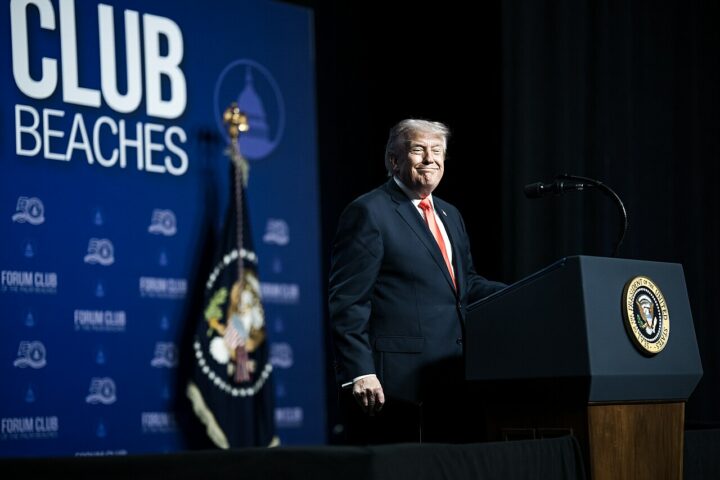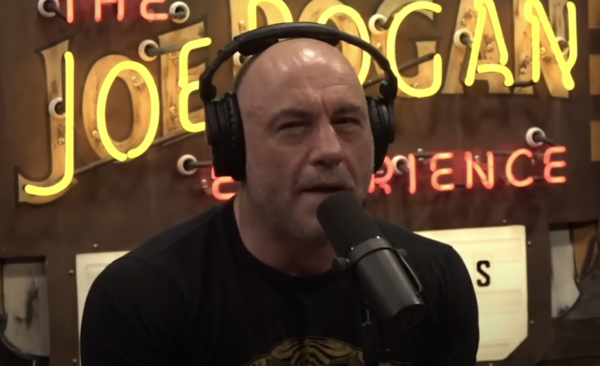
Podcaster Joe Rogan wasted little time returning to sharp criticism of President Donald Trump and the ongoing conflict with Iran, even after a friendly visit to the White House where the two exchanged lighthearted jabs.
Speaking on Thursday’s episode of his widely followed podcast, Rogan sat down with comedian James McCann, who raised a simple but weighty question: are things going to be okay? The question reflected broader uncertainty surrounding the Iran situation, particularly for observers outside the United States trying to make sense of how the conflict began.
Rogan pointed to the fragile and extended ceasefire with Iran, but cautioned that its reliability remains unclear. Reports of Iranian forces seizing and striking ships in the Strait of Hormuz — a critical passageway for global oil shipments — have only deepened concerns about stability in the region. With roughly 20 percent of the world’s oil flowing through that narrow corridor, any disruption carries serious global implications.
Pressed on whether the situation would ultimately stabilize, Rogan offered a blunt assessment: no one really knows. He questioned the timing of the U.S. strikes, suggesting that while tensions with Iran have existed for decades, the decision to escalate when it did seemed difficult to understand. Referencing earlier military action, including a strike on Iranian nuclear facilities, Rogan implied that even those moments of escalation didn’t fully clarify the broader strategy.
At several points, Rogan’s tone shifted from skepticism to outright concern. He openly wondered how the conflict could realistically be resolved and what the long-term consequences might be. Questions about whether the U.S. could become entangled indefinitely — potentially maintaining troops in the region or rebuilding damaged infrastructure — loomed large in the discussion.
Rogan also speculated about the motivations behind the conflict, suggesting that Israel may have played a role in influencing U.S. action. He pointed to the visible relationship between Trump and Israeli Prime Minister Benjamin Netanyahu, including high-profile visits to the White House, as a possible factor. Still, his comments reflected uncertainty rather than firm conclusions, underscoring the broader lack of clarity surrounding the war’s origins.
The criticism marks a notable shift for Rogan, who endorsed Trump during the 2024 presidential election. Since then, however, he has grown increasingly vocal in his disagreements with the administration, not only on foreign policy but also on issues such as deportations and the handling of the Epstein files.
Despite those differences, Rogan’s recent White House visit suggested that lines of communication remain open. During the event, Trump signed an executive order aimed at easing restrictions and expanding research into Ibogaine, a psychoactive substance explored as a treatment for addiction. Rogan has previously discussed the topic on his podcast and had personally raised it with the president.
Even in that more amicable setting, Trump couldn’t resist a playful jab, describing Rogan as “a little bit more liberal” than himself, while still praising him as “an amazing guy.” The exchange highlighted a complicated dynamic — one where personal rapport exists alongside growing policy disagreements.
As the Iran conflict continues to raise difficult questions, Rogan’s evolving stance reflects a broader unease felt by many Americans: support for leadership does not necessarily translate into confidence in every decision, especially when it comes to war.
[READ MORE: California Governor’s Race Tightens as Candidates Prepare for Key Debate]