A federal judge on Tuesday reportedly halted enforcement of a Trump administration-backed policy at the United States Military Academy that restricted civilian professors from speaking publicly to outside groups without prior approval, marking a significant First Amendment setback for the administration’s efforts to reshape military education.
U.S. District Judge Cathy Seibel ruled that the policy likely violates the free speech rights of civilian faculty members at West Point, siding with longtime law professor Tim Bakken, who challenged the restrictions in federal court.
“And even affording Defendants due deference in the realm of military affairs, their stated justifications for the Academic Engagement Policy do not warrant such a broad and standardless intrusion on Plaintiff’s speech and that of other USMA civilian faculty members,” Seibel wrote in her 85-page opinion.
Seibel, a federal judge in New York appointed by former President George W. Bush, rejected arguments from the Justice Department that the dispute should be handled through a specialized federal employee review board rather than the courts.
The judge also pushed back against claims that judicial intervention would improperly interfere with military affairs.
“A court need not defer to mere conjecture and speculation, even when matters of military readiness could be implicated,” Seibel wrote.
The ruling applies specifically to civilian professors and does not affect active-duty military faculty members at West Point.
The controversy stems from a policy implemented by the academy last year shortly after President Donald Trump returned to the White House. Under the rule, faculty members were required to obtain approval from department heads before engaging with outside audiences on matters related to their academic expertise while on duty or while using West Point branding or affiliation.
The restrictions reportedly applied to conferences, podcast appearances, press interviews, and other public engagements.
West Point introduced the policy after Trump signed an executive order targeting what his administration described as “un-American” and “discriminatory” theories at military academies. The order was part of a broader administration campaign against diversity, equity, and inclusion initiatives across federal institutions.
Bakken filed a class-action lawsuit last September challenging both the speech policy and what he described as an unofficial directive discouraging professors from sharing personal viewpoints in the classroom.
In a brief statement following the ruling, West Point declined to comment directly on the ongoing litigation.
“In accordance with standing procedures, the Academy does not comment on current litigation,” the school said. “West Point will continue to work with Department of Justice attorneys from the Southern District of New York on next steps.”
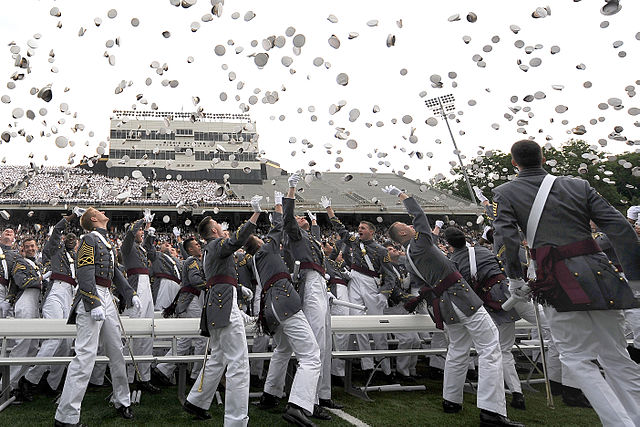
The ruling arrives just days after West Point’s graduation ceremony, where Defense Secretary Pete Hegseth delivered a sharply political speech criticizing diversity initiatives implemented under the previous administration.
“The battlefield does not grade on a curve, and you can’t throw your pronouns at the enemy,” Hegseth told graduating cadets. “Combat is the ultimate test, and our best Americans must ace it.”
The dispute reflects the growing tension between efforts to impose ideological discipline within military institutions and longstanding constitutional protections for speech and academic freedom. While supporters of the administration argue military academies must remain focused on combat readiness and national unity, critics warn that expanding bureaucratic control over speech risks undermining the very liberties service members are sworn to defend.
The case also highlights the increasingly political atmosphere surrounding America’s armed forces, where debates over culture, ideology, and loyalty now regularly collide with questions about military preparedness and the proper limits of government authority.