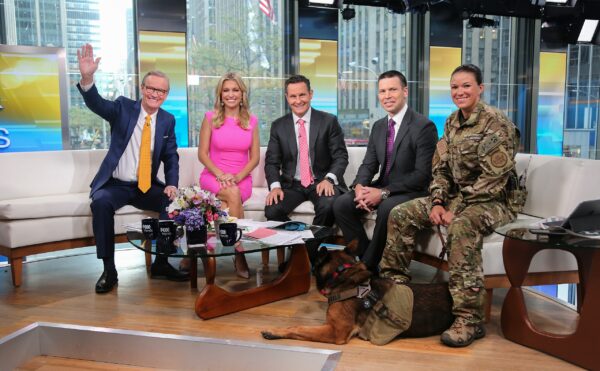
Fox News host Brian Kilmeade and Hudson Institute senior fellow Rebeccah Heinrichs raised sharp concerns Wednesday over the emerging Memorandum of Understanding between the United States and Iran, arguing that several reported provisions could weaken American leverage and leave key allies facing new risks.
During an interview on Fox News, Kilmeade began by focusing on the agreement’s apparent implications for Israel and its ongoing conflict with Hezbollah.
“Rebeccah, can we just start on the Israeli portion of it?” Kilmeade asked. “Israel has to, I guess, stop fighting back against Hezbollah, who’s lobbing missiles at the northern part of their country. This makes absolutely no sense.”
Heinrichs agreed, pointing to years of unsuccessful diplomatic efforts aimed at persuading Hezbollah to disarm.
“It makes no sense,” she said, arguing that repeated negotiations dating back to the early 2000s had failed to convince the group to give up its weapons. If the proposed arrangement is tied to restrictions on Israel’s actions, Heinrichs suggested it could place limits on one of America’s closest regional allies while rewarding an adversary that has consistently resisted diplomatic pressure.
Kilmeade echoed that sentiment, defending Israel’s efforts to respond to attacks and dismissing suggestions that other regional actors could effectively neutralize Hezbollah on their own.
“You can’t blame Netanyahu for this,” Kilmeade said, arguing that Israel is acting in self-defense and has developed the capabilities necessary to protect itself from ongoing missile threats.
The conversation then shifted to the broader details of the agreement, which is expected to be formally presented in the coming days.
Heinrichs praised both Operation Epic Fury and Economic Fury, saying they had placed significant pressure on Iran. Because of that pressure, she questioned why sanctions relief and renewed oil access would be granted at a moment when Tehran appeared to be facing substantial constraints.
According to Heinrichs, one of her biggest concerns is that lifting restrictions could allow billions of dollars to flow back into the coffers of Iran’s Islamic Revolutionary Guard Corps. While administration officials have emphasized that benefits would be tied to compliance, Heinrichs argued that she sees little indication that safeguards such as escrow accounts would be used to ensure Iran fulfills its obligations before receiving economic relief.
Her second major concern centered on the Strait of Hormuz. Heinrichs warned that recognizing any Iranian governance role over the strategic waterway could give Tehran new influence over one of the world’s most important maritime routes.
She argued that even if such charges are described as environmental fees rather than tolls, the practical effect would be similar and could grant Iran a level of control that she believes the United States should not accept.
Kilmeade expressed similar concerns, noting reports that Iran could gain access to frozen funds, resume oil sales, and potentially participate in collecting fees in the Strait of Hormuz after a transition period.
The host argued that such a framework could establish a troubling precedent for international waterways and create consequences extending far beyond the Middle East.
The discussion also touched on concerns about potential benefits for China and questions surrounding the United States’ role in facilitating major investments into Iran.
As the interview concluded, Heinrichs offered a blunt assessment.
“I would say that this Memorandum of Understanding is worse than not having it,” she said, unless substantial changes are made before its formal presentation.
Kilmeade agreed that there was still time for revisions and expressed hope that adjustments could be made before the agreement is finalized.
For both commentators, the central concern was whether hard-won leverage gained through economic pressure and regional military operations could be surrendered too quickly in exchange for promises that may prove difficult to enforce.
[READ MORE: Laura Loomer Blasts JD Vance for Megyn Kelly Appearance Amid Ongoing Tensions Over Trump Coverage]