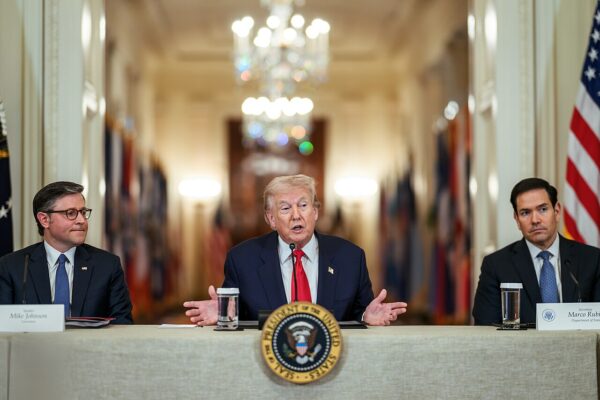
President Donald Trump on Monday approved federal emergency funding for California after a dangerous chemical leak in northern Orange County forced mass evacuations and raised fears of a potentially catastrophic explosion. The move came after Gov. Gavin Newsom requested federal assistance as local and state agencies scrambled to contain the crisis at a manufacturing facility in Garden Grove.
The emergency declaration unlocks Federal Emergency Management Agency support for the more than 785 state and local first responders working at the scene of the GKN Aerospace Transparency Systems facility, located south of Los Angeles. According to Newsom’s office, FEMA assistance will include specialized equipment and additional resources for “life-saving response activities” as crews continue monitoring the volatile situation.
In a statement, Newsom said California was “mobilizing every available resource” to protect nearby communities and assist local emergency efforts. The governor added that officials were coordinating closely with emergency personnel to support evacuations, monitor environmental conditions, and provide information to residents affected by the leak.
Orange County Supervisor Janet Nguyen, who signed the federal emergency declaration request, publicly thanked Trump for approving the aid.
“We thank you, President Trump, we appreciate you,” Nguyen said in a video posted to social media.
The emergency began Thursday when a damaged tank containing between 6,000 and 7,000 gallons of methyl methacrylate — a highly flammable industrial chemical — overheated and began leaking through a crack in the container. Officials warned that the tank was at risk of exploding, prompting evacuation orders affecting roughly 50,000 residents.
As of Monday, authorities said approximately 34,000 evacuees had been allowed to return home after overnight evaluations showed the tank’s temperature had dropped significantly. Still, officials cautioned that the danger had not fully passed.
Orange County Fire Authority division chief Craig Covey warned reporters Monday that while the threat of a massive explosion had eased, smaller blasts or fires remained possible.
“It’s not over yet,” Covey said. “We still have work to do. We still have to mitigate a fire and very small explosion concern, and also a spill potential.”
The chemical involved, methyl methacrylate, can cause respiratory and neurological problems along with irritation to the eyes, skin, and throat, according to the Environmental Protection Agency. Authorities said environmental monitoring efforts will continue well after the immediate danger subsides.
Nguyen told The Associated Press that the South Coast Air Quality Management District plans to monitor local air quality conditions for months ahead, while the EPA will analyze samples from storm drains and sewer systems for contamination concerns.
GKN Aerospace, the British manufacturer that produces cockpit components for both military and commercial aircraft, apologized for the “disruption” caused by the incident.
The chemical emergency marks yet another crisis for Southern California following a string of recent disasters that have strained local emergency systems and tested public confidence in infrastructure and preparedness.
Last week, the Sandy Fire tore through more than 2,100 acres in Simi Valley northwest of Los Angeles. State fire officials reported the blaze was 90 percent contained as of Tuesday.
Meanwhile, county officials said a telecommunications crew accidentally struck an underground pipeline in East Los Angeles on Friday, releasing roughly 2,400 gallons of crude oil into storm drains and the Los Angeles River before emergency crews managed to contain the spill.
The series of incidents has underscored growing concerns about industrial safety, infrastructure failures, and the heavy burden placed on emergency personnel already stretched thin responding to one disaster after another.
[READ MORE: Trump Escalates Attacks on Courts and Congress Over Delayed White House Ballroom Project]