House lawmakers unveiled a bipartisan transportation proposal this week that would require electric vehicle owners to begin paying new federal registration fees, a move supporters say is aimed at restoring fairness to the nation’s highway funding system as more Americans move away from gasoline-powered cars.
The provision is included in the Five-Year Surface Transportation Reauthorization bill, a sweeping bipartisan infrastructure package designed to fund roads, bridges, rail systems, and other transportation projects across the country.
The legislation was introduced after House Transportation and Infrastructure Committee Chairman Sam Graves and ranking member Rick Larsen announced they had reached an agreement on the measure.
Under the House proposal, owners of electric vehicles would pay a new $130 annual registration fee, while plug-in hybrid owners would face a $35 yearly fee. Beginning in 2029, those fees would increase by $5 every other year, though the legislation caps the charges at $150 for EVs and $50 for hybrids.
Supporters of the plan argue the fees are necessary because electric vehicle owners currently do not contribute to the federal Highway Trust Fund through gasoline taxes, which have traditionally financed highway construction and maintenance projects for decades.
“The ‘user pays’ principle has been fundamental to how we fund our nation’s surface transportation system for as long as I’ve been in Congress,” Larsen said in a statement supporting the compromise measure.
The Highway Trust Fund has long relied on federal gas taxes collected from drivers filling up at the pump. As electric vehicles become more common, lawmakers from both parties have increasingly raised concerns about how to maintain funding for roads and bridges when more drivers no longer purchase gasoline.
Chairman Graves framed the proposal as a matter of fairness rather than punishment, saying the bill “ensures that electric vehicle owners begin paying their fair share for the use of our roads.”
At the same time, Larsen emphasized that Democrats negotiated the provision to avoid creating what he described as a punitive burden on EV owners. He pointed to other sections of the legislation that continue federal support for electric vehicle infrastructure and public transportation projects.
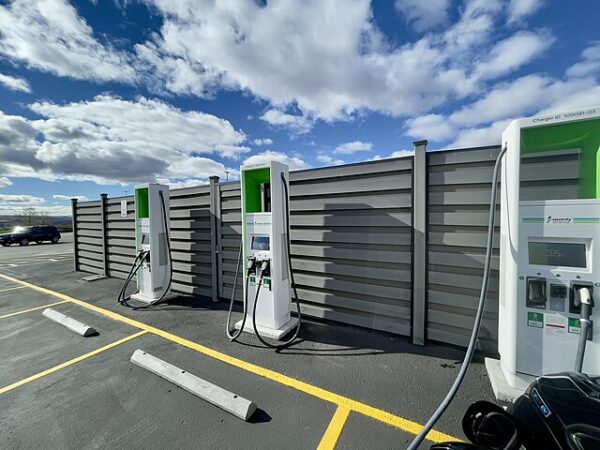
According to Larsen, the bill includes $1 billion aimed at expanding the nation’s EV charging station network while also maintaining major support for public transit systems and bridge repairs.
The proposal highlights the balancing act lawmakers increasingly face as Washington attempts to modernize America’s infrastructure while also adapting to rapidly changing transportation technologies. While many policymakers continue encouraging the growth of electric vehicles, questions remain about how governments will replace declining gasoline tax revenue without placing excessive burdens on drivers already dealing with rising costs.
The legislation also reflects the rare bipartisan cooperation that still occasionally emerges on infrastructure issues, even as Congress remains deeply divided on many other policy battles.
Still, the registration fee provision is far from guaranteed to become law. The Senate would also need to approve the legislation, and Senate Democrats may push to remove or modify the EV fee before any final package reaches the president’s desk.
The debate surrounding the proposal comes as transportation policy increasingly intersects with broader national questions about energy, consumer choice, and government spending priorities. Critics of large federal infrastructure programs have often warned that Washington’s long-term spending commitments can grow rapidly once new funding streams are established, while supporters argue the country’s aging transportation network requires sustained investment.
For now, lawmakers on both sides appear to agree on at least one point: as America’s vehicle fleet changes, the decades-old system used to fund the nation’s roads may be heading for a major overhaul.