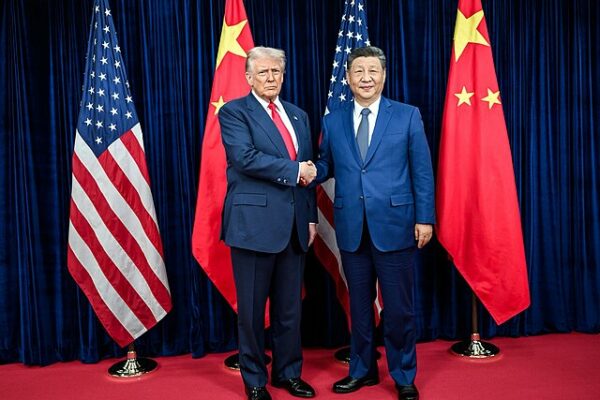
President Donald Trump was visibly energized Thursday evening during a high-profile state banquet in Beijing, where Chinese President Xi Jinping delivered a toast that included a notable nod to Trump’s signature “Make America Great Again” slogan.
The moment came during a globally broadcast event at the Great Hall of the People, part of Trump’s high-stakes visit to China this week. The trip, marked by formal ceremony and diplomatic pageantry, appeared to leave a strong impression on the American president, who has emphasized his personal relationship with Xi as a cornerstone of U.S.-China engagement.
At their initial meeting, Trump spoke warmly about that relationship, telling Xi that their connection represented the longest-standing relationship between leaders of the two countries. He described it as an honor and praised what he called a “fantastic relationship” between them.
Xi’s toast, delivered first at the banquet, struck a tone of mutual respect and shared ambition. Through a translator, the Chinese leader welcomed Trump and the U.S. delegation, describing the visit as historic. He noted that China is entering a new phase of economic and social development under its latest five-year plan, while also acknowledging a milestone for the United States—the 250th anniversary of its independence.
Xi highlighted what he framed as parallel national aspirations, pointing to China’s push for modernization and America’s renewed emphasis on patriotism, innovation, and enterprise. In a line that drew clear attention, he suggested that China’s goal of national rejuvenation and the American aim of “Making America Great Again” could move forward together, with both nations contributing to global well-being.
The remark, referencing Trump’s well-known political slogan, appeared to resonate with the president, who reacted with visible enthusiasm as applause followed.
Trump later delivered his own toast, continuing the theme of shared history and cooperation. He referenced Chinese workers who helped build the transcontinental railroad in the United States, acknowledging their role in a project that has long been associated with both economic progress and significant human cost. The construction effort, widely recognized as grueling and dangerous, resulted in the deaths of thousands of workers, underscoring the often-overlooked sacrifices behind major national achievements.
The president also praised Americans for spreading literacy to China, framing it as an example of positive cultural exchange between the two countries.
The evening’s events reflected a carefully staged display of diplomacy, with both leaders emphasizing common ground despite ongoing differences between their nations. While such gestures can project unity and cooperation on the global stage, they also highlight the complexity of international relations, where symbolism and rhetoric often intersect with deeper strategic interests.
Moments like these can carry significant weight, shaping perceptions at home and abroad. Yet they also serve as a reminder that behind the ceremonial toasts and grand settings lie policies and decisions that affect millions of lives. As world leaders speak of partnership and progress, the broader consequences of geopolitical competition—and the human costs that can accompany it—remain an ever-present reality, even when set against a backdrop of celebration.
[READ MORE: GOP Lawmaker Says Family Felt Fallout of DOJ Probe, Warns Against Government Overreach]