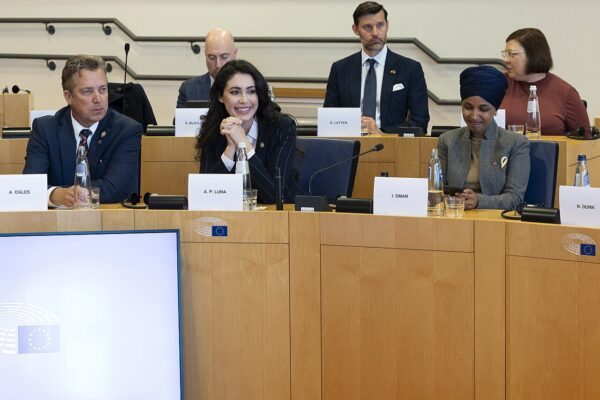
Rep. Andy Ogles is now reportedly speaking out about what he describes as a troubling chapter during the Biden administration, arguing that federal authorities crossed a line in their treatment of elected officials — and left a lasting impact on his family.
In an interview with Maria Bartiromo on Fox Business, Ogles recounted the moment when federal agents seized his cellphone in August 2024, an episode he now frames as part of a broader pattern of government overreach. According to Ogles, the Justice Department has since agreed to return the device and destroy any personal data obtained from it, following what he says was a two-year effort to clear his name.
The congressman tied the incident directly to leadership at the time, contrasting it with what he described as a return to “law and order” under President Donald Trump and current Justice Department officials. Ogles claimed that under former President Joe Biden, federal agencies were “weaponized” against political opponents, including members of Congress.
He pointed to other lawmakers he says were similarly targeted, arguing that such actions run afoul of constitutional protections, including the Speech and Debate Clause. While those claims remain part of an ongoing political debate, Ogles emphasized that the experience should serve as a warning about the potential reach of federal power.
Pressed by Bartiromo on the specifics, Ogles described the moment agents approached him and requested his phone, saying he complied at the time. What followed, he said, was a prolonged legal process that weighed heavily on his personal life.
Beyond the political implications, Ogles highlighted the emotional toll on his family. He shared that one of his children continues to have nightmares about the possibility of him being jailed, a lingering fear he attributes to the uncertainty surrounding the investigation. For the congressman, that impact underscores what he sees as the human cost of aggressive government action.
Ogles said the underlying issue stemmed from what he described as a Federal Election Commission matter, which he characterized as civil in nature and already resolved. However, he alleged that authorities attempted to escalate it into a criminal case. He also suggested the timing of the investigation was suspicious, noting that it came shortly after he had taken political actions, including going after special counsel Jack Smith and introducing articles of impeachment against Vice President Kamala Harris.
Those claims, while disputed in broader political discourse, form the basis of Ogles’ argument that the investigation was not merely procedural but politically motivated. He maintains that similar actions were taken against other elected officials, framing the situation as part of a wider pattern rather than an isolated incident.
The interview reflects a broader concern among some conservatives about the balance between law enforcement authority and civil liberties. While federal agencies maintain that investigations are conducted within legal bounds, critics argue that even the perception of politicization can erode public trust.
For Ogles, the takeaway is straightforward: the federal government must be held in check to ensure it does not overstep its authority. As he told Bartiromo, the experience should serve as a wake-up call — not just for lawmakers, but for the American public at large.
At the same time, the episode illustrates how political and legal battles can spill beyond Washington, affecting families and communities in ways that rarely make headlines. In a climate already marked by deep divisions, the question of how power is exercised — and restrained — remains as pressing as ever.
[READ MORE: Gorka Weighs “Right-Wing Extremism,” Sparks Debate Over Conservatism and Free Speech]