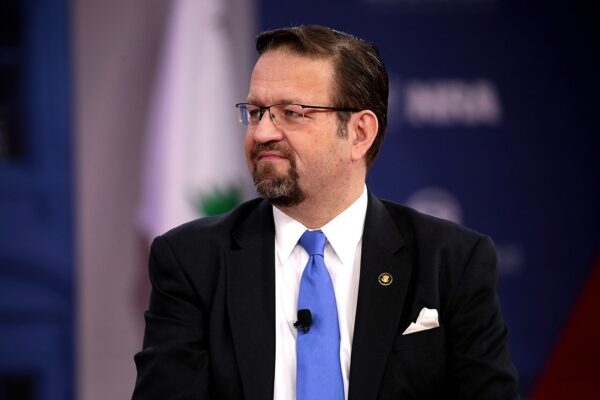
A recent interview with White House counterterrorism official Sebastian Gorka is reportedly drawing renewed attention to how the Trump administration views political extremism—particularly on the right—and who qualifies as part of the conservative movement.
Speaking with Breitbart editor-in-chief Alex Marlow, Gorka was asked directly whether “right-wing extremism” represents a meaningful threat in the United States today. The question reflected a broader national conversation about political violence and the extent to which it exists across the ideological spectrum.
Gorka responded by drawing a contrast, arguing that current data does not show the same level of violent activity on the right as on the left. “Right now, we are not seeing comparable trend lines to violence on the right as we see on the left,” he said, framing the issue as one where perspective and accurate definitions matter.
From there, Gorka shifted the discussion toward a deeper question: who should even be considered part of the conservative movement. In doing so, he referenced two prominent and often polarizing figures, Tucker Carlson and Nick Fuentes, suggesting that their views may place them outside the traditional boundaries of conservatism.
“I’m not sure that Nick Fuentes or Tucker Carlson are conservatives,” Gorka said, arguing that positions he described—such as praising Sharia law or suggesting some Muslim-majority states outperform the United States in freedom and prosperity—are inconsistent with core conservative principles. He added that if such figures are excluded, it becomes difficult to identify mainstream conservative voices who endorse violence, characterizing such individuals as fringe.
Gorka also emphasized that, in his current role, he is not acting as a political commentator but as a government official focused on counterterrorism. Still, his remarks ventured into a politically sensitive space, raising questions about how government figures define ideological boundaries while assessing threats.
The comments quickly drew criticism from journalist Ken Klippenstein, who challenged both the substance and the implications of Gorka’s statements. While Klippenstein made clear he does not support Carlson or Fuentes, he took issue with the suggestion that Carlson had praised Sharia law and accused Gorka of overstepping by weighing in on ideological definitions.
“I’m an absolutist when it comes to free speech,” Klippenstein said, arguing that a government official should not be policing how individuals interpret America or express their views. He suggested the debate was less about extremism and more about internal divisions, particularly following recent disagreements involving the Iran war.
That tension points to a broader undercurrent in the discussion. While the interview centered on extremism, it also revealed fractures within political movements themselves—especially as debates over foreign policy, including military conflict, continue to shape alliances and rhetoric.
As Washington grapples with questions about security and ideological threats, the line between safeguarding the country and defining political identity remains a delicate one. Gorka’s remarks highlight the administration’s view that violent extremism on the right is limited to the fringes, but the reaction underscores how quickly such assessments can evolve into debates over free speech, loyalty, and the costs of political disagreement in a time of heightened global tension.
[READ MORE: Trump Takes Aim at Media Coverage, Defends Record Amid Iran Conflict]