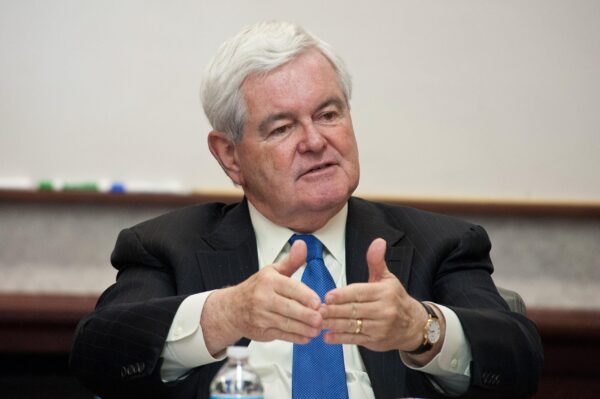
Former House Speaker Newt Gingrich offered a sweeping defense of Donald Trump’s latest Oval Office remarks Monday, highlighting what he described as an ambitious domestic agenda while cautioning that looming decisions on Iran could carry far more serious consequences.
Appearing on the Fox News program Outnumbered, Gingrich pointed first to what he called the breadth of the administration’s efforts on healthcare. He argued that the sheer volume of initiatives makes it difficult for the media to keep pace, citing a range of areas the administration is addressing—from maternal health to chronic illnesses and cost concerns.
Among the announcements was the launch of moms.gov, a maternal healthcare initiative aimed at supporting expecting mothers. Gingrich characterized that portion of Trump’s remarks as particularly strong, saying the administration’s work across multiple fronts reflects a level of activity that is often overlooked.
Still, he quickly shifted focus to what he described as the most consequential part of the president’s comments: the ongoing conflict with Iran. According to Gingrich, the issue presents Trump with a difficult decision point that could define the months ahead.
He suggested that Iran is unlikely to back down, raising the stakes for U.S. policymakers. Trump, Gingrich noted, has repeatedly framed Iran obtaining nuclear weapons as a direct and serious threat to American cities. If that assessment holds, Gingrich argued, it would require the administration to prepare a strategy capable of preventing that outcome.
The comments reflect a broader debate in Washington over how to respond to perceived threats abroad without becoming entangled in prolonged conflicts. While Gingrich emphasized the need to confront risks head-on, his remarks also underscored the gravity of the choices facing leaders when military action enters the equation.
Host Harris Faulkner followed up by raising questions about the War Powers Resolution and why efforts to limit presidential authority have struggled to gain traction, even among Democrats who have voiced support for such measures.
Gingrich responded by pointing to the political realities surrounding Iran. He argued that many lawmakers may hesitate to appear sympathetic to a government that has long expressed hostility toward the United States. In that context, he suggested, efforts to challenge the president’s authority could face resistance from both sides of the aisle.
At the same time, Gingrich acknowledged the complexity of the issue, noting that public opinion often reflects a tension between reluctance to engage in conflict and concern over national security threats. Americans, he said, generally do not favor war, but attitudes can shift when the stakes are framed in terms of potential danger to major cities.
Faulkner agreed, observing that repeated votes on the issue have so far left the president with significant latitude to act.
The exchange highlights a familiar pattern in American politics: broad agreement on the seriousness of international threats paired with deep unease about the costs of confronting them. As discussions about Iran continue, the challenge for policymakers will be balancing those competing concerns—recognizing both the risks of inaction and the consequences that can come with escalating conflict.
For now, Gingrich’s remarks reflect a perspective that sees strength and preparedness as essential, even as the realities of modern warfare continue to weigh heavily on both leaders and the public.
[READ MORE: Trump Launches Moms.gov, Touts Drug Price Push While Taking Aim at Media Critics]