President Donald Trump is reportedly signaling a willingness to ease the burden on American drivers as gas prices climb, saying he is considering suspending the federal gas tax for a limited time until costs come back down.
The proposal, first reported by Nancy Cordes of CBS News, comes as fuel prices have steadily risen following U.S. military action in Iran and the subsequent closure of the Strait of Hormuz, a key global shipping route. With gasoline now topping $4.50 a gallon, pressure has mounted on Washington to respond to the strain felt by everyday Americans.
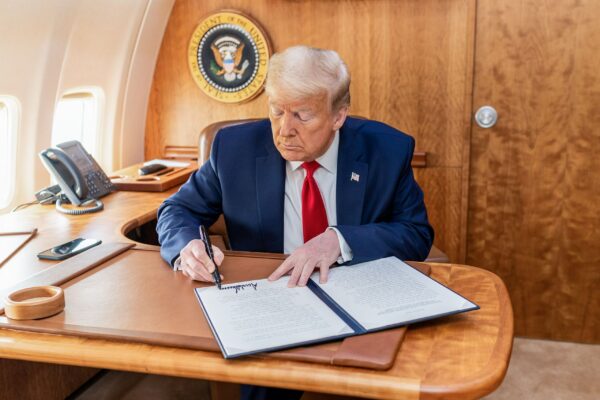
Speaking by phone with Cordes on Monday, Trump indicated that the idea gained traction as the conversation progressed. “We’re going to take off the gas tax for a period of time, and when gas goes down, we’ll let it phase back in,” the president said, adding that action is indeed on the table.
The federal gas tax, currently set at 18 cents per gallon, is a longstanding source of funding for highway repairs, construction, and other transit projects. Any move to suspend it, however, would not be simple. As Cordes noted, such a change would require an act of Congress, setting the stage for what could become a significant legislative debate.
Lawmakers on both sides of the aisle have already introduced proposals to either pause or reduce the tax, suggesting that the issue may be one of rare bipartisan concern. Still, the trade-offs are clear. Pausing the tax would mean a noticeable drop in funding for infrastructure projects, raising questions about how those gaps would be addressed if relief at the pump comes at the expense of long-term investment.
Cordes reported that the timeline for action could be relatively swift if momentum builds. The president is expected to press Republicans to prioritize the measure, while some Democrats have already laid the groundwork with existing legislation. Whether Congress can align on the details, however, remains uncertain.
Key questions linger: Should the tax be eliminated entirely for a fixed period, or simply reduced? How long should such relief last? And how quickly should it be phased back in once prices stabilize? These are the kinds of decisions lawmakers would need to hammer out, and they are far from trivial.
The backdrop to all of this is a geopolitical situation that continues to ripple through the global economy. Rising fuel costs tied to conflict underscore the real-world consequences of military action, particularly when disruptions in critical regions like the Strait of Hormuz affect supply chains and consumer prices alike. While Washington debates policy responses, American families are already feeling the impact.
In contrast to his openness on gas tax relief, Trump appeared less inclined to support direct financial assistance for other sectors. According to Cordes, the president showed little interest in a bailout or bridge loan for the airline industry, arguing that airlines are not struggling.
As the administration weighs its options, the proposed gas tax pause reflects a broader challenge: balancing immediate economic relief with long-term fiscal responsibilities, all while navigating the unpredictable costs that can accompany overseas conflict.