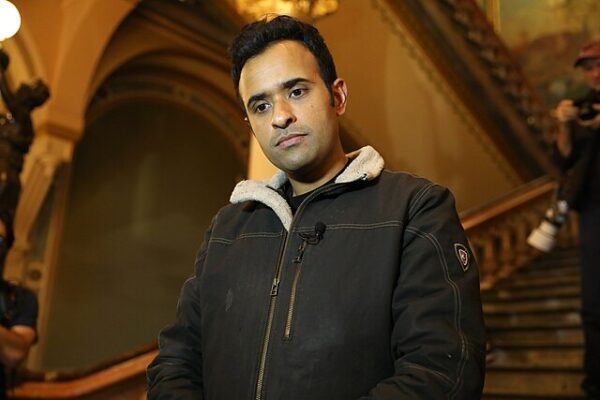
Political analyst Mark Halperin is now reportedly casting fresh doubt on whether Vice President JD Vance will ultimately seek the presidency in 2028, even as speculation intensifies over a potential Republican primary showdown with Secretary of State Marco Rubio.
Speaking on his show Friday, Halperin pointed to growing concerns within political circles about Vance’s political standing and public image, suggesting that those doubts are fueling interest in Rubio as a possible standard-bearer for the party. According to Halperin, some of his sources view Rubio favorably while questioning whether Vance has connected effectively with voters.
Halperin argued that Vance faces multiple political headwinds tied to the administration’s broader record, including rising gas prices, concerns about a difficult midterm election cycle, and the ongoing war in Iran. While those issues are not unique to Vance, Halperin suggested they could weigh heavily on perceptions of his leadership and electability.
Beyond policy concerns, Halperin emphasized what he described as a potential “downside image” problem for Vance, claiming that some critics see him as inauthentic or distant in public appearances. He contrasted that perception with Rubio’s recent improvement in how he is viewed, particularly in terms of likability and performance in interviews and on the campaign trail.
“I don’t think Vance can win the performance competition,” Halperin said, noting that qualities like personal connection and communication style remain central to how voters evaluate presidential candidates. While acknowledging he could be wrong, Halperin maintained that Rubio may currently have the edge in those areas.
Still, Halperin floated a scenario that diverges from the widely discussed idea of a contentious primary battle between the two men. He suggested that a direct clash may never materialize, in part because of their personal relationship and the realities of modern political campaigns.
“These two guys are genuine friends,” Halperin said, adding that challenging a sitting vice president within the same party typically requires an aggressive and divisive approach. In today’s political climate, that kind of confrontation could come at a steep cost, not just politically but personally.
Halperin also pointed to a factor often overlooked in campaign speculation: family life. Both Vance and Rubio are raising young children, and Halperin suggested that the intense scrutiny of a presidential campaign could weigh heavily on their decisions. He noted that both men understand the pressures that come with national campaigns and may hesitate to subject their families to that level of attention.
If Vance ultimately decides not to run, Halperin believes Rubio would be in a commanding position to secure the Republican nomination, potentially with the backing of both the president and Vance himself. On the other hand, if Vance does enter the race, Halperin suggested the possibility that the two men could align rather than compete.
In that scenario, he speculated they might even form a joint ticket early in the campaign, presenting a united front and potentially building significant financial support before the first votes are cast.
Halperin acknowledged that Vance is highly competitive and may still choose to run, noting that both men have demonstrated strong political instincts. But he maintained that Rubio’s more measured style could appeal to voters looking for steadiness at a time when the stakes—both at home and abroad—remain high.
As Republicans look ahead to 2028, Halperin’s comments highlight an emerging dynamic: a party weighing not only personalities and policy, but also the broader pressures of leadership in an era shaped by economic uncertainty and the lingering shadow of foreign conflict.
[READ MORE: Trump Enlists Postal Service in Push to Tighten Mail-In Voting Rules]