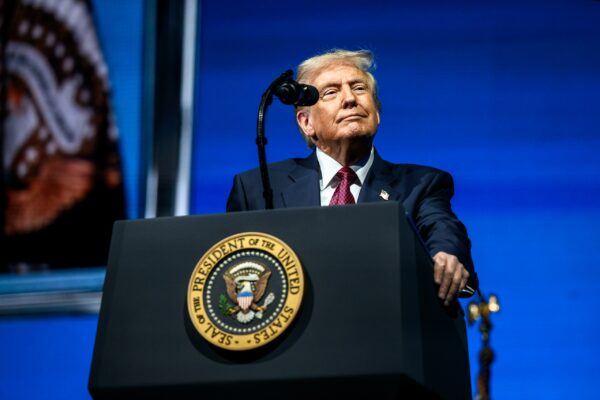
President Donald Trump on Monday renewed pressure on U.S. allies to step up in the escalating Iran conflict, urging South Korea to join the mission after a reported البحرية incident involving a commercial vessel in the strategically vital Strait of Hormuz.
The call came after South Korea acknowledged an explosion aboard a Hyundai Merchant Marine ship traveling through the waterway, which Iran has effectively closed amid its ongoing war with the United States and Israel. While the cause of the blast remains under investigation, Seoul has not ruled out the possibility of an attack, underscoring the growing risks facing international shipping in the region.
Trump, posting on Truth Social, pointed to what he described as Iranian aggression against neutral nations. He specifically referenced what he said were attacks tied to “Ship Movement, PROJECT FREEDOM,” including the South Korean cargo vessel. In a pointed message, the president suggested that it may be time for Seoul to move beyond observation and take a more active role.
“Iran has taken some shots at unrelated Nations,” Trump wrote, before adding that South Korea should consider joining the mission. He also touted U.S. military actions in the region, noting that American forces had downed seven small boats, which he characterized as among Iran’s remaining capabilities.
Despite the tense circumstances, there were no casualties reported from the explosion. According to Reuters, 24 crew members were aboard the vessel, including six South Korean nationals. Seoul’s foreign ministry emphasized that it is maintaining close communication with relevant countries and is prepared to take necessary steps to protect its ships and personnel navigating the increasingly dangerous waters.
The situation highlights the broader economic stakes tied to the Strait of Hormuz, a critical global energy chokepoint. South Korea alone depends heavily on Middle Eastern energy supplies, with roughly 70 percent of its crude oil and about 20 percent of its liquefied natural gas imports flowing through the region. With the strait effectively shut down, at least 26 South Korean ships are now stranded, a reality that could have ripple effects across global markets.
Trump has previously criticized key allies, including South Korea, Japan, and Germany, for what he sees as a lack of decisive action to reopen the waterway. His latest remarks signal a continued push for burden-sharing, even as the risks of deeper military involvement remain a point of concern.
The standoff in the Strait of Hormuz has already disrupted commercial traffic, contributing to rising energy costs and volatility in crude oil markets. Iran’s warnings that it could fire on vessels attempting to pass through the strait, combined with the U.S. naval presence, have created a high-stakes environment where miscalculation could quickly escalate tensions.
Meanwhile, diplomatic efforts appear stalled. U.S.-Iran peace talks remain at an impasse, with both sides rejecting each other’s proposals for a longer-term ceasefire. As the conflict drags on, the pressure on global allies to take sides — or at least take action — is only intensifying, even as the potential costs of a wider war loom large.
[READ MORE: GOP Courts Fetterman as Senate Control Hangs in the Balance]