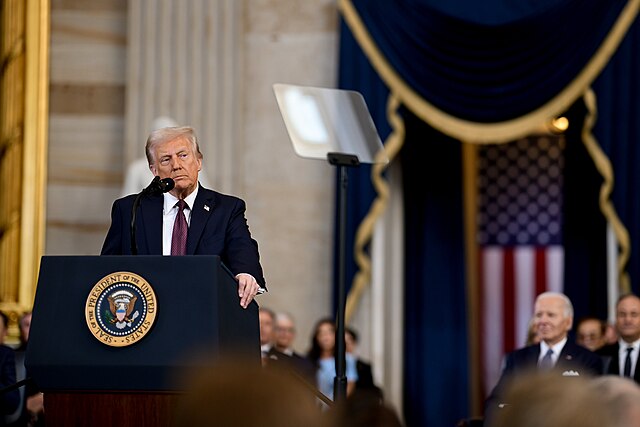
President Donald Trump on Friday announced plans to raise tariffs on cars and trucks imported from the European Union, escalating a trade dispute he says stems from the bloc’s failure to honor a prior agreement.
In a post on Truth Social, Trump said tariffs on European vehicles would increase to 25 percent beginning next week. He framed the move as a direct response to what he described as noncompliance by the EU with the terms of an earlier trade deal, signaling a tougher stance as tensions between the two economic powers continue to simmer.
At the same time, Trump emphasized that the higher tariffs would not apply to vehicles produced within the United States. He pointed to what he described as a surge in domestic auto manufacturing, highlighting ongoing construction of new plants and more than $100 billion in investment tied to American production. According to the president, those facilities—staffed by U.S. workers—are set to come online soon, reflecting what he portrayed as a historic expansion of the industry.
The dispute centers on the Turnberry trade deal reached last summer, which set tariffs on European automobiles and parts at 15 percent. In exchange, the European Union agreed to a series of concessions, including reducing barriers to U.S. industrial goods and committing to significant energy purchases and investment.
European officials, however, are pushing back on Trump’s claims. Bernd Lange, who chairs the European Parliament’s International Trade Committee, called the president’s latest move “unacceptable” and insisted the EU is honoring its commitments under the agreement. He said lawmakers in Europe are actively working through the legislative process required to finalize their end of the deal, with a target completion date in June.
Lange also accused the United States of failing to fully uphold the agreement, pointing to tariffs affecting hundreds of products containing steel and aluminum that he said are now subject to an average tariff of 26 percent.
The back-and-forth highlights the fragile nature of transatlantic trade relations, where disagreements over compliance can quickly spiral into broader economic confrontation. While tariffs are often framed as tools to protect domestic industries and strengthen negotiating positions, they can also raise costs and create ripple effects across global markets.
Trump’s announcement underscores his administration’s continued focus on reshoring manufacturing and leveraging tariffs as a means of encouraging foreign companies to invest in the United States. By exempting vehicles made in U.S. plants, the policy is designed to reward companies that shift production stateside, reinforcing a broader push for economic self-reliance.
At the same time, the escalation adds another layer of uncertainty to an already complex global economic environment. Trade disputes, much like geopolitical conflicts, can carry consequences that extend beyond their immediate targets, affecting supply chains, pricing, and long-term economic stability.
For now, both sides appear firmly dug in. The United States is signaling it is prepared to act decisively if it believes agreements are not being honored, while European officials maintain they are following through on their commitments.
As the new tariff deadline approaches, the situation reflects a familiar tension in modern policymaking: balancing national economic interests with the risks that come from escalating disputes between major global partners.
[READ MORE: Powell’s Plan to Stay at Fed Sparks Backlash, Raises Questions About Policy Direction]