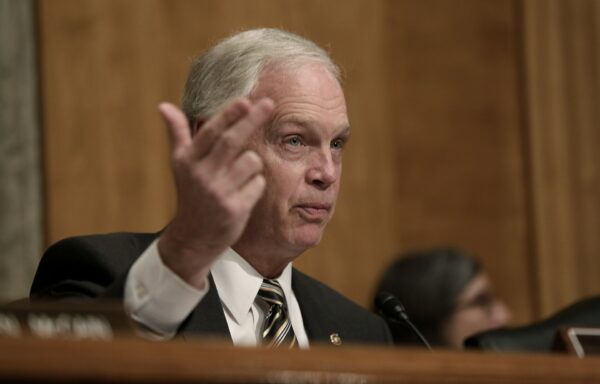
Sen. Ron Johnson is raising the stakes in an already heated debate on Capitol Hill, suggesting Republicans should consider eliminating the Senate filibuster if Democrats continue to block funding for the Department of Homeland Security, particularly in light of what he described as a “moment of national danger.”
Speaking during an interview on Fox News’s “Sunday Morning Futures” with host Maria Bartiromo, Johnson acknowledged the long-standing strategic value of the filibuster. He noted that Republicans would likely want to preserve the rule in the future to counter legislation they oppose, particularly if Democrats regain control of Congress.
Still, Johnson argued that current circumstances may warrant a more drastic approach. With concerns mounting after a possible third assassination attempt against President Donald Trump and ongoing tensions tied to the military conflict with Iran, he suggested the Senate may need to act decisively—even if it means upending one of its most enduring traditions.
“The Senate’s already broken enough,” Johnson said, framing the issue as one of urgency rather than precedent. He warned that if Democrats refuse to approve DHS funding during a time of heightened risk, Republicans should be prepared to “rip the Band-Aid off” and move forward without the filibuster.
The proposal centers on what is commonly referred to as the “nuclear option,” a controversial maneuver that would allow legislation to advance with a simple majority vote rather than the 60 votes typically required to end debate. The term itself reflects how seriously senators view the move, often likening it to a last-resort tactic given its potential to fundamentally reshape the legislative process.
Johnson pointed out that Democrats could take similar action if they regain power, suggesting that Republicans may be better off acting first rather than waiting for the rule to be dismantled under different leadership.
This is not the first time Johnson has expressed openness to scrapping the filibuster. He previously supported eliminating it to pass the Safeguard American Voter Eligibility Act, a key legislative priority for Trump that would require proof of citizenship for voter registration and identification for voting, whether by mail or in person.
Despite Johnson’s stance, not all Republican leaders appear ready to go that far. Senate Majority Leader John Thune pledged during his 2024 leadership bid to preserve the filibuster, signaling a more cautious approach within the party’s ranks.
The debate also echoes a precedent set during Trump’s first term. In 2017, Republicans moved to lower the threshold for confirming Supreme Court nominees from 60 votes to a simple majority, enabling the confirmation of Neil Gorsuch after Democrats attempted to block his nomination.
While that move was limited to judicial confirmations, critics and supporters alike have long warned that further erosion of Senate rules could have sweeping consequences. The current discussion, fueled by concerns over national security and political gridlock, suggests those warnings are no longer theoretical.
At its core, the issue reflects a deeper tension between urgency and restraint. Calls to act swiftly in the face of perceived threats are growing louder, but so are concerns about what may be lost if long-standing checks within the system are discarded. In a climate shaped by both political division and security fears, the path forward remains anything but simple.