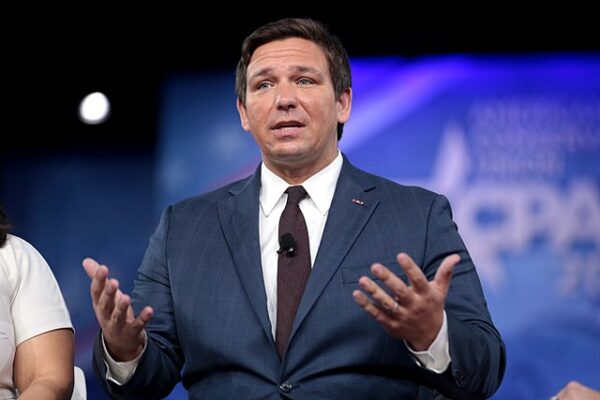
Florida Gov. Ron DeSantis is moving aggressively to reshape the political landscape in his state, unveiling a new congressional map that could add four Republican seats in the U.S. House. The proposal comes as states across the country race to redraw district lines ahead of the 2026 midterm elections, raising the stakes in an already heated political environment.
Speaking to Fox News on Monday, DeSantis presented a map that would tilt heavily Republican, with only a handful of Democratic-leaning districts remaining—primarily concentrated north of Miami and in parts of central Florida. The governor framed the move as a correction to what he described as past imbalances in representation.
According to DeSantis, Florida did not receive fair treatment following the 2020 Census, and he argued that the state’s population growth since then has only strengthened the case for revisiting district lines. He pointed to a significant political shift within the state, noting that Florida has moved from a Democratic majority to a Republican advantage of roughly 1.5 million voters.
DeSantis also took aim at the role of race in the current districting system, arguing that drawing maps based on racial considerations is unconstitutional and should be prohibited. His proposal, he said, is designed to better reflect the current makeup of Florida without relying on those factors.
The map still faces a key hurdle: approval by the state legislature. Republicans hold majorities in both the Florida House and Senate, meaning the proposal stands a strong chance of advancing. If it clears that step, DeSantis would be able to sign it into law in time for the upcoming midterm elections.
The governor described the new map as a more accurate representation of Florida’s electorate today, suggesting that political boundaries should align more closely with the state’s evolving demographics and voter trends.
Currently, Florida sends 20 Republicans and seven Democrats to the U.S. House. That number recently shifted after Rep. Sheila Cherfilus-McCormick resigned while facing potential sanctions from the House Ethics Committee. She had been found guilty on 25 of 27 ethics violations tied to allegations of embezzling millions, further adding to the state’s political turbulence.
Florida’s redistricting push is part of a broader national trend. Other states are also revisiting their maps as both parties look for advantages ahead of 2026. Virginia, for example, recently approved a new map that is expected to increase Democratic representation in the House by four seats.
The flurry of redistricting efforts highlights how much control over congressional maps can influence the balance of power in Washington. While both parties argue they are seeking fairness, the reality is that these decisions often deepen political divides and intensify competition for every seat.
As states redraw their lines, the question becomes whether these changes will bring clearer representation—or simply escalate the ongoing political tug-of-war that defines modern elections. In a climate already shaped by sharp divisions, the battle over maps is yet another reminder that the fight for control rarely stays confined to the ballot box alone.
[READ MORE: Trump Describes WHCA Gunman as ‘Blur,’ Praises Law Enforcement While Questions Linger]