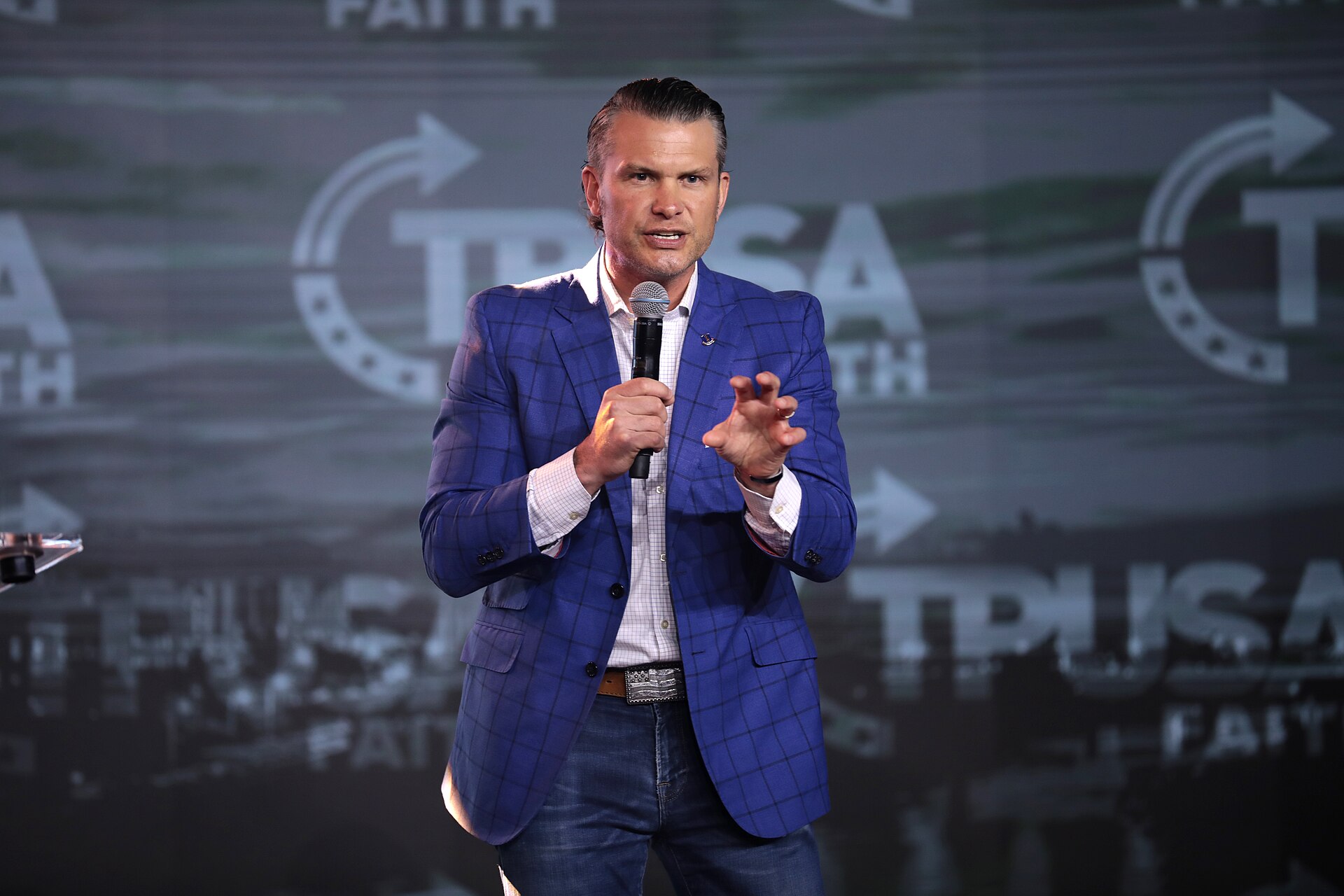
Defense Secretary Pete Hegseth on Friday sharply criticized European allies for what he described as a lack of meaningful support in the ongoing Iran conflict, taking aim at what he called an overreliance on discussion rather than decisive action.
Speaking during a morning press conference, Hegseth directed his comments squarely at European nations, arguing they have not done enough to assist efforts tied to the Strait of Hormuz—a critical global shipping lane through which roughly 20 percent of the world’s oil supply flows. The waterway has become a central flashpoint after Iran announced a blockade amid President Donald Trump extending a ceasefire with the country.
Hegseth’s remarks reflected a broader frustration within the administration over what it views as an imbalance in responsibility among allies. He warned that the era of relying heavily on U.S. protection without reciprocal commitment is coming to an end.
“Europe and Asia have benefited from our protection for decades, but the time for free-riding is over,” Hegseth said. “America and the free world deserve allies who are capable, who are loyal, and who understand that being an ally is not a one-way street.”
He emphasized that the stakes surrounding the Strait of Hormuz are, in many ways, even higher for European and Asian economies than for the United States. “We are not counting on Europe, but they need the Strait of Hormuz much more than we do,” he added, urging allied nations to shift from rhetoric to tangible contributions.
In a pointed critique, Hegseth mocked what he characterized as Europe’s tendency to hold high-level meetings without producing concrete outcomes. “They might want to start doing less talking and having less fancy conferences in Europe, and get a boat,” he said, suggesting that real-world action—not diplomatic posturing—should take priority.
The defense secretary doubled down on that criticism by referencing a recent summit of European Union leaders in Cyprus, where officials gathered to discuss the Iran conflict. Hegseth dismissed the meeting outright, calling it a “silly conference.”
“I would call it a silly conference in Europe last week where they got together and talked about talking about maybe doing something eventually when things are done,” he said, underscoring his view that the discussions lacked urgency and substance.
At the same time, Hegseth reaffirmed the administration’s commitment to its current course, stating that the United States remains resolute in its objectives. He described American capabilities as unmatched and suggested that enforcement efforts, including the blockade, are continuing to expand.
“Our will is unshakable,” Hegseth said, adding that the U.S. has the time and resources necessary to sustain its position. He also echoed the administration’s message that Iran still has an opportunity to come to the negotiating table, describing the situation as a “historic chance” for a serious agreement.
The comments highlight a growing divide between Washington and some of its traditional allies over how to approach the conflict. While U.S. officials press for greater burden-sharing, European leaders appear to be taking a more measured approach, focused on discussion and potential diplomacy.
The exchange underscores a familiar strain in international coalitions during times of conflict: the tension between urgency and caution, between calls for immediate action and the instinct to deliberate. As the situation unfolds, that divide may prove just as consequential as the conflict itself, raising broader questions about how alliances function when the costs—and consequences—of war continue to mount.
[READ MORE: Varney Flags Weak Polling for Trump as Questions Grow Over Government Performance]