President Donald Trump said Friday that U.S. warships are being rearmed with what he described as “the best ammunition” as the administration prepares for the possibility that high-stakes peace talks with Iran could collapse.
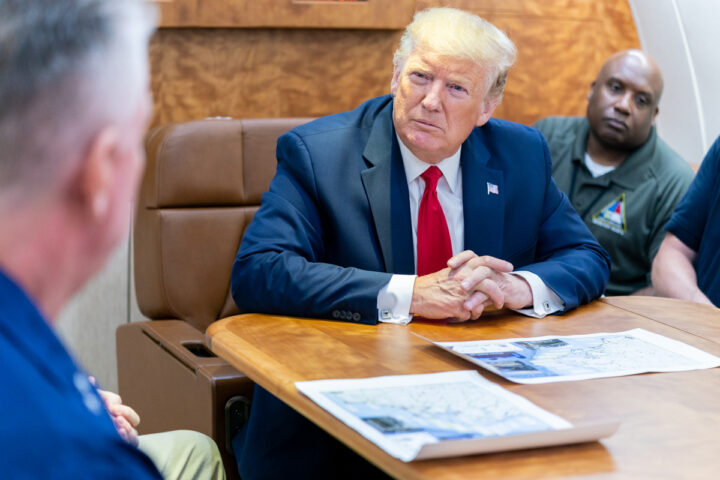
Speaking in a phone interview with The Post, Trump made clear that while diplomacy is underway, the military option remains firmly on the table. His remarks came shortly after Vice President JD Vance departed aboard Air Force Two for Islamabad, where negotiations are expected to begin in earnest.
Vance will be joined by special envoy Steve Witkoff and presidential adviser Jared Kushner, forming a delegation tasked with securing what the administration hopes will be a final peace agreement. The talks follow a two-week ceasefire announced earlier this week, though its durability remains uncertain.
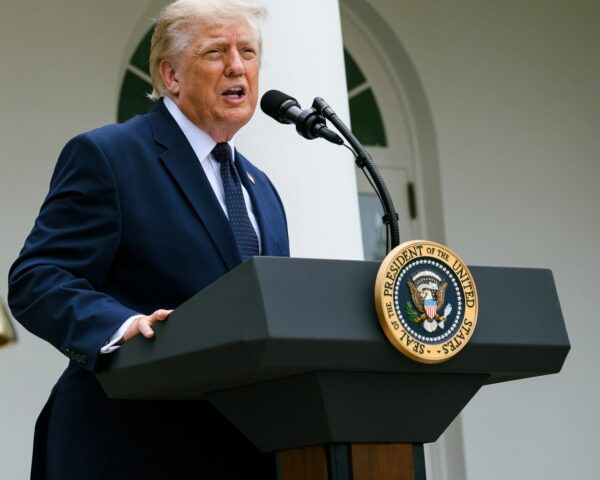
“We’re going to find out in about 24 hours. We’re going to know soon,” Trump said when asked about the likelihood of success. He described the situation as a “reset,” but paired that optimism with a stark warning. “We’re loading up the ships with the best ammunition, the best weapons ever made,” he said, adding that the military is being prepared at an even higher level than in previous operations.
Trump did not shy away from emphasizing the consequences if diplomacy fails. “If we don’t have a deal, we will be using them, and we will be using them very effectively,” he said, underscoring the administration’s dual-track approach of negotiation backed by force.
Iran is expected to send a delegation led by Foreign Minister Abbas Araghchi, along with parliamentary speaker Mohammad Bagher Ghalibaf. The presence of senior officials suggests the talks will address some of the most contentious issues in the ongoing conflict.
Among the key sticking points is Iran’s nuclear program. Trump expressed skepticism about Tehran’s intentions, telling The Post that Iranian officials have offered conflicting messages. “To our face, they’re getting rid of all nuclear weapons, everything’s gone,” he said. “And then they go out to the press and say, ‘No, we’d like to enrich.’”
The negotiations are expected to focus heavily on U.S. demands that Iran surrender an estimated 1,000 pounds of deeply buried enriched uranium. Another central issue is the reopening of the Strait of Hormuz, a vital shipping lane that has seen limited traffic since U.S. bombing operations began. Trump has repeatedly stressed that restoring free passage through the strait is essential to any lasting agreement.
Additional topics on the table include Iran’s support for regional proxy groups, the future of its ballistic missile program, and Tehran’s request for relief from U.S. sanctions. Each of these issues presents its own challenges, reflecting the broader complexity of the conflict.
The president’s comments highlight the delicate balance facing negotiators—an effort to secure peace while preparing for the possibility of renewed military action. While the administration is pursuing a deal, the continued emphasis on firepower serves as a reminder of how quickly the situation could escalate if talks break down.
As the delegation arrives in Pakistan, the outcome remains uncertain. The next 24 hours, as Trump put it, may prove decisive—not only for the ceasefire but for whether the conflict moves toward resolution or returns to a more dangerous path.