Russia’s Foreign Ministry issued a stark warning Monday urging foreign nationals to leave Kyiv following a sweeping assault on the Ukrainian capital and surrounding areas, as the war entered another deadly and destructive phase with no clear end in sight.
In a statement released after the latest strikes, the Russian government said its forces were carrying out what it described as “consistent and systemic strikes” against Ukraine’s defense industry infrastructure. Moscow claimed the attacks were focused on facilities tied to the design, manufacturing, and operation of drones, while also accusing Ukraine of attacking a Russian university days earlier.
The ministry warned that future strikes would continue targeting what it called “decision-making centres and command posts,” adding that foreign citizens, including diplomatic personnel and workers for international organizations, should leave Kyiv “as soon as possible.”
Russian officials also cautioned civilians against approaching Ukrainian military or government facilities in the capital, underscoring fears that additional attacks could follow.
Ukrainian President Volodymyr Zelenskyy said Sunday that Russia launched a large-scale assault across Ukraine overnight, with Kyiv serving as the “primary target.” According to Zelenskyy, Russian forces fired an Oreshnik ballistic missile at Bila Tserkva, a city about 50 miles south of the capital.
The Ukrainian leader said at least 83 people were injured in the attacks and confirmed fatalities, though he did not specify the death toll in his remarks.
Zelenskyy stated that Russia launched 90 missiles of various types during the barrage, including 36 ballistic missiles, along with roughly 600 drones. He said the strikes damaged critical civilian infrastructure and residential areas, including a water supply facility, schools, a market, and dozens of apartment buildings.
The Oreshnik missile has become an increasingly troubling weapon in the conflict. According to the Missile Defense Project at the Center for Strategic and International Studies, the intermediate-range ballistic missile is capable of carrying multiple warheads and traveling at hypersonic speeds. Russia previously used the missile against Ukraine in 2024 and again earlier this year.
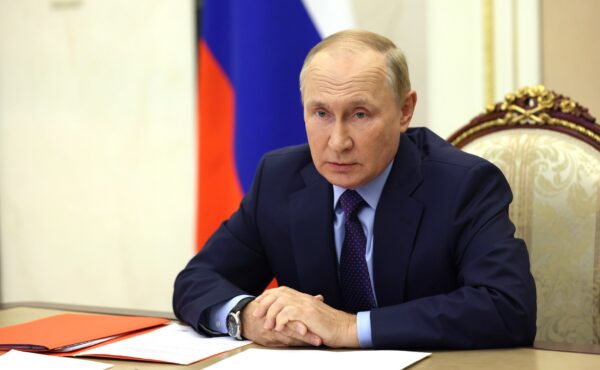
As the conflict grinds into its fifth year since Russian President Vladimir Putin launched the invasion, European leaders responded with renewed condemnation of Moscow’s tactics and renewed pledges of support for Ukraine.
European Commission President Ursula von der Leyen accused the Kremlin of showing “brutality and disregard for both human life and peace negotiations,” arguing that attacks on civilians reflected desperation rather than strength.
French President Emmanuel Macron also condemned the strike and specifically referenced the use of the Oreshnik missile, describing Russia’s war effort as being trapped in an “impasse.” Macron said France remained committed to supporting Ukraine and strengthening European security.
Meanwhile, Zelenskyy said Ukraine is continuing to work with international partners to strengthen air defense systems and accelerate the development of anti-ballistic missile capabilities within Europe. He expressed frustration over what he described as a lack of progress with the United States on expanding production of anti-ballistic systems.
“Unfortunately, there has been no progress for a long time with America,” Zelenskyy said, while adding that European nations are now trying to speed up their own production efforts.
Even as both sides escalate militarily, diplomatic channels remain active. Zelenskyy later said he expects “new diplomatic engagements” with officials from the Trump administration regarding possible paths toward ending the war — a reminder that after years of destruction, missile strikes, and mounting civilian casualties, the search for peace remains overshadowed by the continued expansion of the battlefield.
[READ MORE: Pope Leo XIV Warns AI Could Threaten Human Dignity, Calls For Slower And More Careful Approach]