Iranian officials are now reportedly calling on civilians across the Gulf region to report the locations of U.S. service members operating out of hotels and office spaces, a development that underscores how the ongoing conflict is increasingly spilling into civilian life.
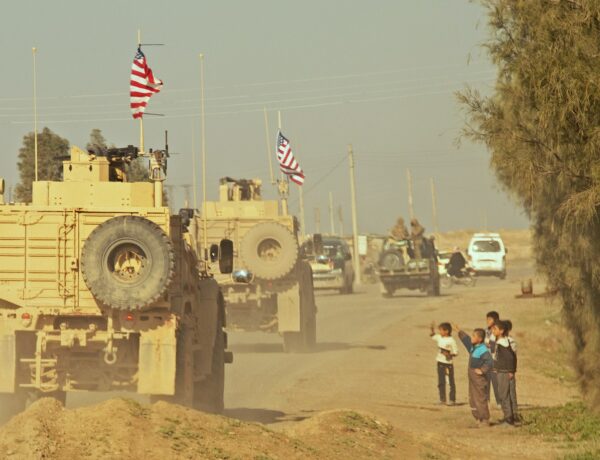
According to a report from The New York Times, Iran’s retaliatory strikes on American bases in the Middle East have forced U.S. forces to adapt quickly, relocating thousands of troops to less predictable and, in theory, safer locations.
American officials told the outlet that “thousands” of the roughly 40,000 troops stationed in the region at the start of the war on Feb. 28 have been moved in response to the heightened threat environment.
But that shift has come with trade-offs. Retired Master Sgt. Wes J. Bryant, a former U.S. Air Special Operations targeting specialist, warned that relocating operations into improvised settings presents real challenges. While temporary command centers can be established, he noted that critical equipment is often too large or complex to function effectively in such environments.
“You’re absolutely going to lose capability,” Bryant said, explaining that certain systems simply cannot be set up in places like hotels. His remarks point to the difficult balance between protecting personnel and maintaining operational effectiveness in an increasingly fluid conflict.
Iran’s response has taken a more ominous turn. The intelligence arm of the Islamic Revolutionary Guard Corps issued a message, reported by Tasnim News Agency, urging civilians to identify and report the whereabouts of American personnel.
The statement warned residents not to shelter U.S. troops and encouraged them to distance themselves from any locations where Americans might be present.
“We are forced to identify and target the Americans,” the message stated, adding that it is an “Islamic duty” to report such information via the messaging platform Telegram.
The directive raises serious concerns about the role of civilians in the conflict, effectively drawing them into the line of fire. Encouraging the public to act as informants risks blurring the already fragile boundary between military targets and civilian spaces—a dynamic that has historically led to dangerous consequences.
For years, the U.S. and Israel have accused groups like Hamas and Hezbollah of placing military assets in civilian areas, a practice often described as using “human shields.” The current situation, critics may argue, reflects a similarly troubling pattern, where noncombatants are increasingly entangled in military strategy.
The human cost of the conflict continues to rise. Since fighting began, 13 U.S. service members have been killed, along with more than 1,500 Iranians. Casualties have also extended across the region, with 18 Israelis and more than 1,000 Lebanese reported dead amid Israel’s ongoing operations.
As the war drags on, the latest developments highlight a sobering reality: even as military leaders adjust tactics and strategies, the impact is no longer confined to traditional battlefields. Instead, it is spreading into everyday spaces—hotels, offices, and neighborhoods—where civilians are now being asked, or compelled, to take sides.
In a conflict already marked by escalating retaliation, the push to involve civilians serves as a stark reminder that once war expands beyond its initial lines, it becomes far harder to contain—and far more costly for everyone involved.
[READ MORE: Trump Rejects Musk’s Offer To Pay TSA Agents]