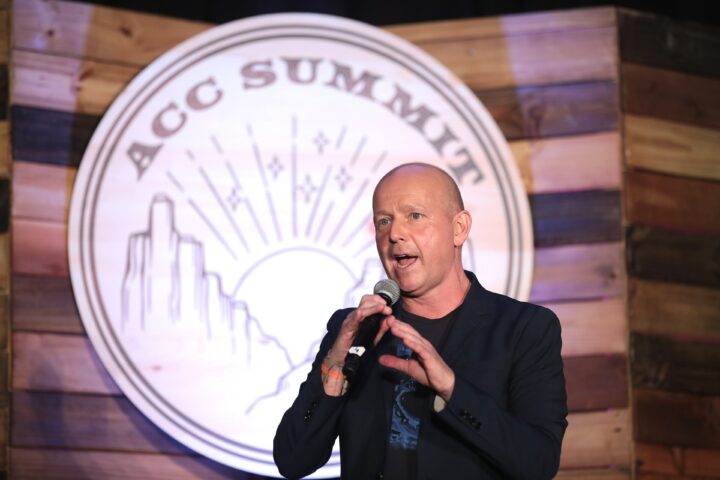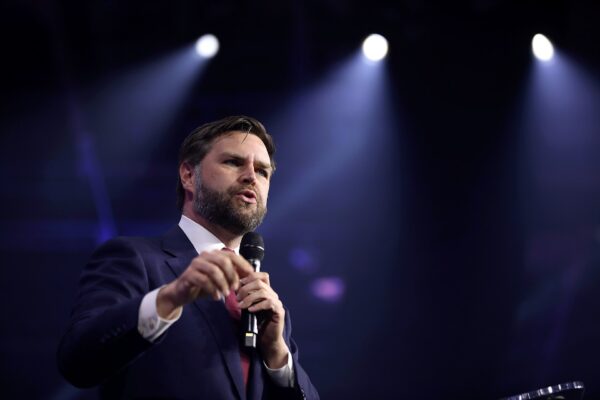
Vice President JD Vance’s team saw a notable change this week as his special adviser on the Middle East, Wesam H. Hassanein, stepped down from his role and moved into the private sector, taking a position with the lobbying firm Continental Strategy.
The departure, first reported Monday, comes at a pivotal moment as Operation Epic Fury enters its fourth week, with the United States continuing its military campaign against Iran. The timing has drawn attention in Washington, particularly as questions linger about how fully aligned Vance has been with the administration’s approach.
Hassanein, however, pushed back on any suggestion that his exit was tied to the conflict.
“I’m not leaving because I oppose the president’s decision on Iran – I’m 100% supportive of President Trump’s decision to deny Iran nuclear weapons,” he said. “We should have done what President Trump is doing years ago.”
Before joining Vance’s office last year, Hassanein worked at the State Department, bringing foreign policy experience to the vice president’s team. His move to Continental Strategy places him at a firm that focuses on navigating federal agencies and policymaking circles, highlighting the often-blurred lines between government service and influence in Washington.
Continental Strategy, founded by Carlos Trujillo — who served as U.S. ambassador to the Organization of American States during Trump’s first term — has seen rapid growth. According to reports, the firm experienced a 1,423 percent increase in federal lobbying revenue last year. On its website, the firm emphasizes its “extensive knowledge of agencies” such as the Department of Homeland Security and the Treasury Department, pointing to its network and policy expertise as key advantages.
Hassanein’s departure also comes amid renewed scrutiny of Vance’s position on the Iran operation. While the vice president has publicly backed President Trump, reports have suggested that behind closed doors, he expressed skepticism about launching military strikes.
That tension reflects a broader divide within parts of the conservative movement, where long-standing concerns about foreign intervention continue to surface even as leaders project unity.
Publicly, Vance has made clear his support for the mission and its stated objective. In an interview with Fox News host Jesse Watters, he emphasized that the president has a defined goal and rejected the idea that the United States would be drawn into a prolonged conflict.
“President Trump will not get the United States into a years-long conflict with no clear objective,” Vance later wrote, reiterating that preventing Iran from obtaining a nuclear weapon remains the central aim of the operation.
At the same time, the backdrop of past U.S. engagements overseas has left many Americans wary of open-ended commitments, making assurances about limited scope all the more significant.
Vance has also taken steps to defend his alignment with the president. Last week, he accused a reporter of attempting to “drive a wedge” between himself and Trump, signaling sensitivity to suggestions of internal disagreement at a time when the administration is seeking to present a unified front.
For now, Hassanein’s move appears to be a routine transition from public service to the private sector. Still, its timing — amid an active military campaign and ongoing debate over America’s role abroad — serves as a reminder of the high stakes surrounding decisions in Washington.
As Operation Epic Fury continues, the administration’s ability to maintain both strategic clarity and public confidence may prove just as critical as developments on the ground.