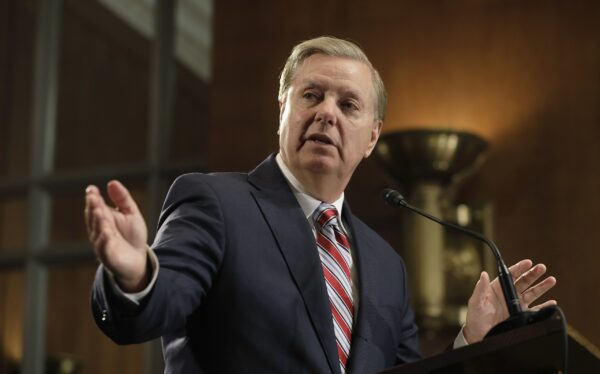
Rep. Anna Paulina Luna, R-Fla., sharply criticized Sen. Lindsey Graham, R-S.C., on Sunday, accusing him of showing a troubling disregard for American troops as Washington continues to grapple with the human cost of the ongoing war with Iran.
In a post on X, Luna said she was “deeply upset” by Graham’s comments about the possibility of U.S. servicemembers dying in battle, arguing that his tone suggested soldiers were “expendable cattle.” She called the remarks “unacceptable and dark,” pointing to the heavy toll of past conflicts, including the more than 26,000 American casualties suffered during the Battle of Iwo Jima.
The criticism came in response to Graham’s appearance on Fox News Sunday, where he voiced strong support for a potential U.S. effort to take control of Kharg Island, a key Iranian oil export hub located just off the country’s coast.
Graham praised the broader military campaign, calling it “an amazing military operation” while offering a brief acknowledgment of those who have died. At the same time, he expressed confidence in U.S. forces, particularly the Marines, and in the leadership of the Department of Defense.
“We did Iwo Jima. We can do this,” Graham said, referencing one of the most brutal battles in Marine Corps history to underscore his belief that American forces are capable of achieving the objective.
That comparison, however, appeared to strike a nerve with critics like Luna, who see such historical parallels as a reminder not just of military resolve, but of the staggering human cost that can accompany it.
The Battle of Iwo Jima, which lasted five weeks during World War II, remains one of the bloodiest engagements involving U.S. Marines. It is notable as the only battle in that war where American casualties exceeded those of Japanese forces, according to the National Museum of the Pacific War.
Now, weeks into the current conflict with Iran, the toll is already mounting. Thirteen U.S. servicemembers have been killed, and at least 200 others have been wounded, raising concerns among some lawmakers about how much further the fighting could go — and at what price.
Still, others in Washington argue that targeting Kharg Island could deliver a significant strategic blow to Iran. The island is responsible for roughly 90 percent of the country’s crude oil exports, making it a critical piece of economic infrastructure.
Graham suggested that whether through direct seizure or blockade, controlling the island would weaken the Iranian regime, describing it as a “terrorist regime” that would begin to falter under such pressure.
“I don’t know if you take the island or you blockade the island,” Graham said, “but I know this, the day we control that island, this regime… has been weakened.”
The divide highlights a broader tension that often emerges during wartime: balancing strategic objectives with the realities faced by those sent to carry them out. While confidence in American military strength remains high among many leaders, the growing casualty figures and the memory of past conflicts continue to weigh heavily on others.
As the debate unfolds, Luna’s remarks reflect a strain of concern within the Republican Party itself — one that supports a strong national defense but remains wary of treating the sacrifices of American servicemembers as an afterthought in the pursuit of military goals.
[READ MORE: Trump To Deploy ICE To Airports To Help TSA]