A growing number of Republican senators are cautioning that economic headwinds tied to the Trump administration’s tariff policies and rising oil prices could create political challenges for the GOP as November’s elections approach.
Several lawmakers say the combination of trade uncertainty, inflation concerns, and the ongoing military conflict with Iran could put pressure on voters already uneasy about the economy. With energy markets rattled by disruptions in the Middle East, some Republicans are warning that the party could face serious consequences at the ballot box if conditions don’t improve.
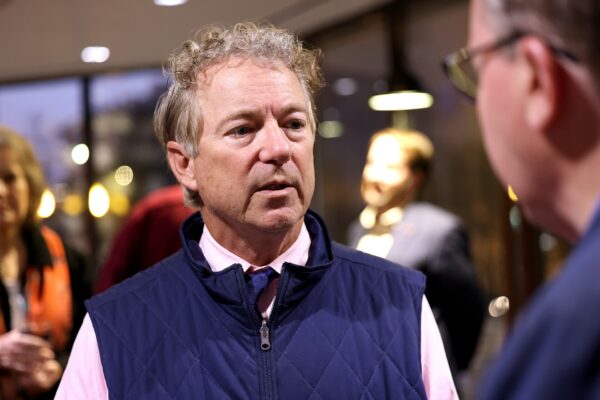
Sen. Rand Paul (R-Ky.) delivered one of the starkest warnings this week, predicting Republicans could face a “disastrous election” if oil prices remain elevated and voters continue to feel the squeeze from higher costs.
Paul said the situation could become especially tense as Election Day draws closer if oil prices hover near current levels.
“The closer we get to the election, if oil prices are $100 a barrel in September or October, I think you’ll see mass fear and hysteria break out on the Republican side,” he said.
The Kentucky senator also pointed to a broader economic reality that many Americans are grappling with. While inflation may be rising at a slower pace than before, prices that surged in earlier years have not fallen back down.
“There’s a difficult realization that inflation doesn’t go away. You had four years of Biden when prices went up about 20 percent. They don’t reverse themselves, we’re adding them to them at a lower rate,” Paul said. “Unless your salary went up 25 percent in the last five years, you’re worse off than you were five years ago.”
Paul suggested that political leaders should be mindful of how the conflict with Iran is framed, arguing that a more measured tone could help avoid worsening the situation.
“I think the president is starting to sense that,” he said. “The less talk we have of unconditional surrender and ‘We’re going to pick the next ayatollah,’ the more realism that’s injected into this, the better.”
He added that from a political standpoint, a quicker resolution to the conflict would benefit Republicans heading into the election season.
“For the Republican Party and just for politics, the sooner the war ends, the better for us,” Paul said.
Other GOP lawmakers are quietly voicing similar concerns. One Republican senator, speaking anonymously about internal discussions, said colleagues have been worried for months about voter dissatisfaction with the economy and now fear the war could deepen those concerns.
The lawmaker said some Republicans were surprised by the scale of the conflict and the scope of the administration’s war aims.
“Taken off-guard by the expansive nature of what’s happening with the conflict, the expansive nature of the war aims, and [we] are trying to figure out where this goes,” the senator said.
Signs of political trouble may already be emerging. The same senator pointed to weaker Republican turnout compared to Democratic turnout in last week’s Texas primary as a warning sign.
“Democrats are very, very motivated, turning out in big numbers. Republican voters are a lot less motivated and there’s a lot of work to be done,” the lawmaker said.
Public opinion data also suggests growing frustration over the cost of living. A new NBC News poll of 1,000 registered voters conducted in late February and early March found that 62 percent disapprove of Trump’s handling of inflation and the cost of living, up from 55 percent a year earlier.
Sen. Susan Collins (R-Maine), who faces a competitive reelection race, said rising fuel costs are already weighing heavily on voters in her state.
“They are not happy, obviously. Many rural Mainers have to go long distances to get to work. We’re a very rural state,” she said.
Collins also suggested the economic strain caused by the conflict could eventually pressure Iran.
“If this keeps up, it’s going to hurt the Iranians themselves because their own oil is [not] going to be able to get through the Strait of Hormuz,” she said.
The conflict has effectively frozen oil shipments through the Strait of Hormuz, a narrow passageway through which roughly 20 percent of the world’s oil supply typically flows. Ships moving through the area face the risk of Iranian missile and drone strikes.
Energy markets have been volatile as a result. West Texas Intermediate crude oil surged to $116 per barrel on Monday before falling to $90 on Wednesday. Before the U.S. and Israel launched their missile and bombing campaign against Iran on Feb. 28, the price had closed at $67 per barrel.
Republicans from agricultural states say the situation is creating additional hardship for farmers already struggling with trade tensions. High fuel costs, paired with depressed commodity prices linked to disputes with China and other foreign markets, are squeezing agricultural producers.
Sen. Chuck Grassley (R-Iowa) said farmers in his state are feeling the pressure.
“They’re losing a dollar on corn, two dollars on soybeans and that this is just one more [piece of] bad news,” Grassley said.
He suggested that releasing oil from the Strategic Petroleum Reserve and allowing year-round sales of E15 — a gasoline blend containing corn-derived ethanol — could help reduce prices. The Energy Department announced Wednesday it would release 172 million barrels of oil from the reserve.
Sen. Jerry Moran (R-Kan.) said farmers in his state are facing some of the toughest conditions he can recall.
“The circumstance in ‘Ag Country’ is the most severe, serious financial circumstance that I can recall,” Moran said.
He said producers are struggling with rising costs for fuel and fertilizer while commodity prices remain too low to cover expenses.
“They’re very anxious for the president to reach conclusions on trade agreements that lower the tariff barriers and nontariff barriers that agriculture has faced from many countries,” Moran said. “They’re very anxious for that to happen quickly.”
Complicating matters further, a recent Supreme Court decision ruled that Trump lacked authority under the International Emergency Economic Powers Act to impose global tariffs, raising new questions about the administration’s leverage in negotiating trade deals.
Moran said it remains difficult to predict how the races for control of Congress will unfold this fall, but he emphasized that economic conditions will play a major role.
“It’s hard to predict where it might fall but … the economy generally and the cost of business and any difficulties in agriculture are not good signs for Republicans,” he said.