President Donald Trump reacted enthusiastically Wednesday to a major ruling from the U.S. Supreme Court that struck down a majority-Black congressional district in Louisiana, signaling support for the court’s decision even as questions swirl about its broader political impact.
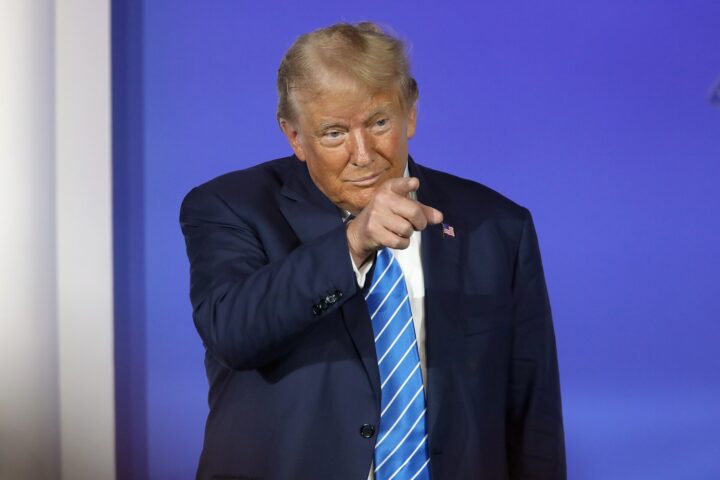
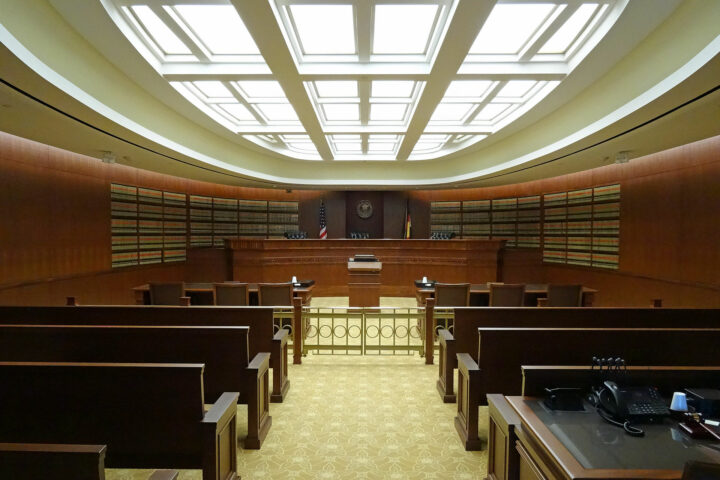
Speaking to reporters inside the Oval Office, Trump was asked about the 6-3 ruling, which invalidated Louisiana’s second majority-Black district on the grounds that it relied too heavily on race in its design. The decision, handed down by the court’s conservative-leaning majority, has already sparked debate over redistricting and the future of voting laws in the South.
Initially, Trump appeared unaware of the specifics. When asked whether Republican-led states should consider redrawing congressional districts ahead of the midterms in light of the ruling, he said he had not yet been briefed, explaining that his day had been filled with meetings, including time spent with the Artemis II astronauts and discussions about construction projects.
“Tell me about what happened?” Trump asked a reporter, prompting a brief explanation that some believe the ruling could lead to an increase in Republican-held seats in the region.
“That’s good,” Trump responded with visible approval. “That’s the kind of ruling I like.”
The exchange highlighted a familiar dynamic in Washington, where major legal decisions often intersect with political strategy. While Trump’s reaction was upbeat, the underlying issue — how congressional districts are drawn — remains a contentious and complex question with long-term consequences.
The ruling itself drew strong language from members of the court. Chief Justice John Roberts described the Louisiana district as a “snake,” suggesting it had been constructed in a way that prioritized racial considerations over traditional districting principles. Justice Samuel Alito echoed that view, writing that the map amounted to an “unconstitutional gerrymander.”
Alito went further, arguing that allowing race to factor into government decision-making marks a departure from constitutional norms. He also contended that the goals of the 1965 Voting Rights Act have been stretched by those seeking to shape districts along racial lines for political advantage, emphasizing that the law was intended to address intentional discrimination — a standard he described as difficult to prove.
Back in the Oval Office, the conversation briefly shifted as CNN anchor Kaitlan Collins attempted to ask a question. Trump dismissed her outlet as “fake news” before she pivoted away from the court ruling and instead asked about ongoing conflicts abroad, including tensions involving Iran and the Ukraine-Russia war.
That moment underscored how domestic legal battles often unfold against the backdrop of global challenges. While the Supreme Court’s decision may reshape political maps at home, the nation’s attention remains divided between internal disputes and external pressures.
The ruling, and Trump’s reaction to it, reflects a broader debate over the role of race, law, and politics in shaping representation. Supporters of the decision see it as a reaffirmation of constitutional limits, while critics argue it could have far-reaching effects on electoral balance. As with many such decisions, its full impact may take time to emerge — even as political leaders quickly stake out their positions.