White House press secretary Karoline Leavitt forcefully pushed back Wednesday against claims from a reporter that the Trump administration failed to explain the “imminent threat” posed by Iran before launching a major military strike over the weekend.
The exchange occurred during a press briefing when Andrew Feinberg of The Independent questioned the justification for President Donald Trump’s decision to authorize Operation Epic Fury, a historic U.S. attack on Iran carried out alongside Israel.
Feinberg suggested the administration had cited a series of past grievances against the Iranian regime but had not clearly explained the specific immediate danger that prompted the military action.
“You listed a long list of grievances against the Iranian government, going back to the takeover of the embassy in ’79, barracks bombing in the ’80s, et cetera,” Feinberg said. “But no one from the administration has laid out the imminent threat that was supposed to be taken care of by this.”
He also pointed to what he described as differing explanations from officials within the administration, referencing remarks from Secretary of State Marco Rubio and the president himself.
Feinberg noted that Rubio had described the threat as potential retaliation by Iran against American interests following Israeli strikes, while Trump had said his decision was based on his belief that Iran was preparing to attack.
“Why is it that across the administration, you can’t say what the imminent threat against the United States was that required us to launch this?” Feinberg asked.
Leavitt quickly rejected the premise of the question and defended the administration’s reasoning for the operation.
“I completely reject the premise of your question,” Leavitt said.
She emphasized that multiple top officials had addressed the issue publicly, including the president, the secretary of war, the chairman of the Joint Chiefs, the vice president, and the secretary of state. Leavitt said she was appearing before reporters to once again outline the factors that led to the president’s decision.
According to Leavitt, Trump’s choice to authorize the strike was not made in isolation but was the result of a broader assessment of threats posed by Iran.
“This decision to launch this operation was based on a cumulative effect of various direct threats that Iran posed to the United States of America,” she said.
Leavitt pointed to Iran’s status as what she described as the world’s leading state sponsor of terrorism and warned about the country’s expanding military capabilities.
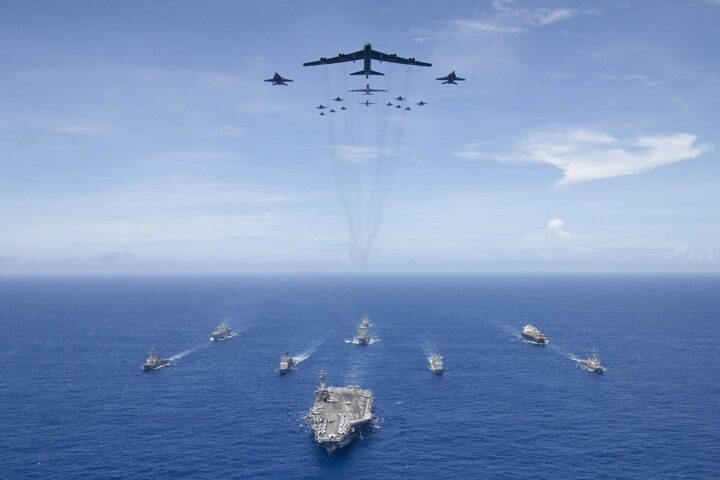
She said Iran had been rapidly building up its ballistic missile program while strengthening its naval forces, developments she argued were designed to give Tehran greater security inside its borders as it pursued nuclear weapons.
Such actions, Leavitt said, could ultimately threaten Americans stationed throughout the region and potentially even those in the United States.
Leavitt also referenced what she described as extensive but unsuccessful negotiations between the United States and Iran.
Through those talks, she said, the president concluded that Iran remained determined to pursue what she characterized as destructive objectives.
“The president was not going to be just another president on a very long list who sat back and passed the buck of this direct threat to the next administration,” she said.
Leavitt explained that Trump ultimately determined Iran posed an imminent and direct threat to the United States and American assets in the region.
Based on that conclusion, she said, the president decided to strike first alongside Israel rather than risk waiting for a potential attack.
“The determination was made that the president was going to strike first alongside Israel,” Leavitt said, adding that the results had already demonstrated the effectiveness of that decision.
She also took aim at media coverage of the issue, urging reporters to present the full context of the administration’s reasoning rather than focusing on isolated comments from individual officials.
“These decisions are not made in a vacuum,” Leavitt said, insisting that the administration’s explanations reflected a broader assessment of the threat environment.
According to Leavitt, Trump acted based on the belief that Iran was preparing to strike the United States or its assets in the region and chose not to stand by and allow that to happen.