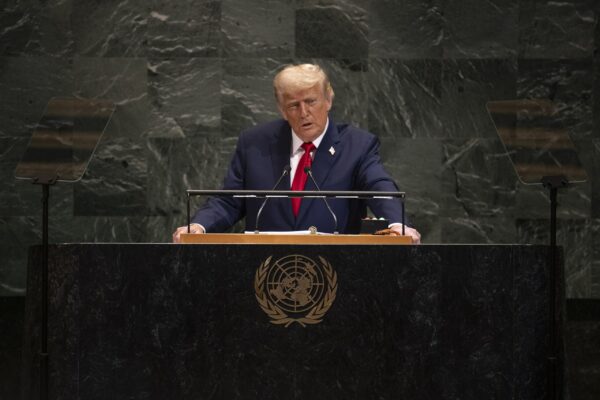
President Donald Trump announced Tuesday that the United States would temporarily halt its newly launched maritime operation in the Strait of Hormuz, signaling a possible shift from immediate military action toward diplomacy—at least for now.
In a post on Truth Social, Trump said the pause in “Project Freedom” would last for a “short period of time” as negotiations with Iran continue toward what he described as a potential “Complete and Final Agreement.” The president emphasized that the decision followed requests from Pakistan and other countries, as well as what he called significant military success and progress in talks with Iranian representatives.
While the ship-guiding mission is being paused, Trump made clear that the broader blockade will remain in place. The move reflects a balancing act: maintaining pressure while leaving room for negotiations that could bring an end to the conflict.
The announcement came just one day after Project Freedom began. On Sunday, Trump said the U.S. Navy would assist in guiding vessels belonging to neutral parties safely through the Strait of Hormuz, a critical global shipping route. The operation was framed as a way to ensure safe passage for commercial traffic amid rising tensions.
However, the start of the mission quickly drew a response from Iran. According to the administration, Iranian forces attacked U.S.-escorted ships and U.S. Navy vessels and also launched strikes targeting the United Arab Emirates. The escalation underscored how quickly efforts to secure the waterway could draw the United States deeper into confrontation.
Trump responded with a forceful warning during remarks to Fox News correspondent Trey Yingst, stating that if U.S. ships were targeted, Iran would face overwhelming consequences. Despite that warning, Iran reportedly launched additional drones and missiles at the UAE on Tuesday, adding to concerns about the fragile state of the situation.
At the Pentagon, Defense Secretary Pete Hegseth maintained that a ceasefire was still holding, even as strikes were reported. He described the U.S. effort in the Strait as a major achievement, calling it “a direct gift to the world.” Hegseth pointed to the successful transit of two U.S. commercial ships, accompanied by American naval forces, as evidence that the shipping lane could remain open.
He also emphasized the scale of the U.S. military presence supporting the mission, noting that destroyers, aircraft, drones, and surveillance systems were providing continuous coverage over the waterway. The show of force, he suggested, was intended to deter further interference with international commerce.
Secretary of State Marco Rubio echoed that message, telling reporters that the initial phase of U.S. military operations—referred to as “Epic Fury”—had concluded. According to Rubio, the situation has now entered a different stage, focused on securing safe passage and advancing diplomatic efforts.
“The operation is over,” Rubio said, referring to the earlier phase. “We’re now on to this project of freedom.”
The pause in Project Freedom highlights the uncertain path forward. On one hand, the administration is signaling confidence that a deal could be within reach. On the other, the rapid escalation following the operation’s launch serves as a reminder of how easily such conflicts can spiral. Even as officials point to progress, the continued reliance on military pressure underscores the risks—and costs—that come with trying to manage both war and peace at the same time.
[READ MORE: Trump Strikes Back Against Republicans Who Refused To Gerrymander]