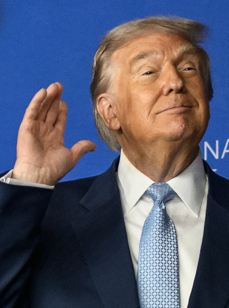
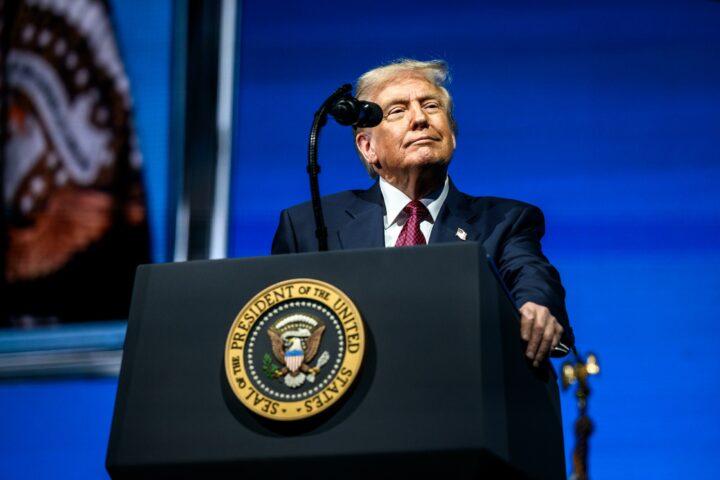
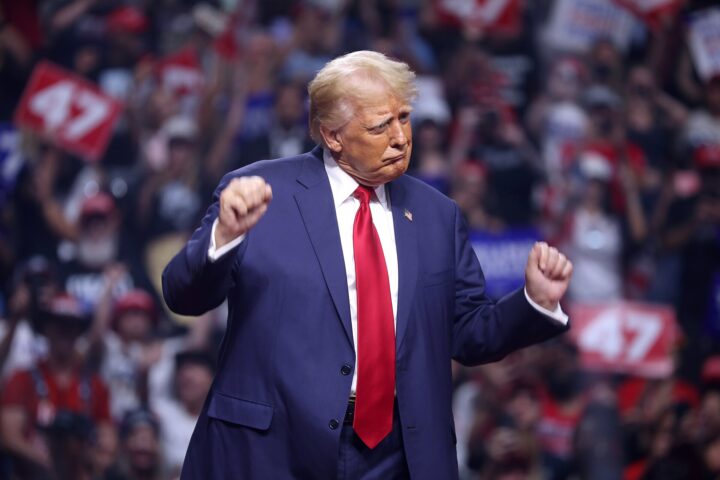
President Donald Trump said he will move to allow cattle ranchers and farmers to process their own food, expanding his administration’s effort to challenge the dominance of the nation’s largest meatpackers and give producers more control over how their cattle reach consumers.
The announcement came after Trump discussed the issue with conservative commentator Glenn Beck, who urged the president to “look at “the meat processing cartel”” and recommended easing federal regulations so ranchers could slaughter and process their own cattle.
Trump said he would examine the issue and later took aim at the handful of companies that dominate the American meatpacking industry, wrote The Guardian.
“I have heard that they have had a tremendous problem with the Big Processors, who many say are a nasty Monopoly,” Trump wrote on Truth Social. “There are, essentially, 4 of them, a very non competitive number, and they make life miserable for our wonderful Farmers and Ranchers, and I can’t let that happen.”
Four companies control the bulk of U.S. beef processing, leaving ranchers dependent on a relatively small number of slaughterhouses to bring their cattle to market. Producers have long complained that limited processing capacity and federal inspection requirements make it costly and difficult for smaller operations to process their own animals or sell meat directly to local customers.
Trump’s proposal would seek to give farmers and ranchers another option.
The move also comes as the administration faces criticism from cattle producers and some Republicans over its decision to temporarily ease tariffs on 300,000 metric tons of imported beef.
The White House has defended the additional imports as a way to bring down grocery prices. But cattle industry groups and Republican lawmakers have warned that cheaper foreign beef could discourage American ranchers from rebuilding their herds at a time when the U.S. cattle inventory has fallen to its lowest level in roughly 75 years.
Allowing ranchers to process more of their own cattle could provide a counterweight to that policy by giving domestic producers greater flexibility and reducing their reliance on major meatpacking companies.
Supporters of smaller-scale processing have argued that current regulations favor large processors that can more easily absorb the costs of federal inspection and compliance. Expanding on-farm and independent processing, they say, could create more competition, give ranchers additional places to sell their cattle and strengthen local meat markets.
Food-safety advocates have traditionally cautioned that any loosening of processing rules would need to preserve inspection and sanitation standards designed to protect consumers.
The administration has already taken steps to encourage smaller processors through USDA funding, regulatory changes and increased antitrust scrutiny of the major meatpackers.
Trump’s latest comments suggest he wants to go further by allowing farmers and ranchers themselves to play a larger role in slaughtering and processing the animals they raise.
The administration has not yet released details explaining how the proposal would work, what inspection requirements would remain in place or whether meat processed under the new system could be sold across state lines.