President Donald Trump pushed back Thursday against criticism of his administration’s interim agreement with Iran, sharply attacking those who have argued the deal gives too much ground to Tehran.
The president’s remarks came after the United States and Iran signed a 14-point memorandum of understanding that extends the regional ceasefire, including in Lebanon, and sets a 60-day window for continued negotiations toward a final agreement. The interim deal also lays the groundwork for reopening the Strait of Hormuz, a critical passageway for global energy shipments.
Trump, writing on Truth Social, pointed to market gains and falling oil prices as evidence that the agreement was already producing results.
The agreement includes a $300 billion reconstruction plan for Iran and calls for the removal of “all types” of U.S. sanctions on the Islamic Republic. It also grants Iran access to billions of dollars in previously frozen funds, allows Tehran to continue enriching uranium, and permits the development of ballistic missiles. Those provisions mark a significant shift from positions that had previously been treated as red lines by the Trump administration.
Trump has continued to insist that Iran must never obtain a nuclear weapon, wrote CNBC.
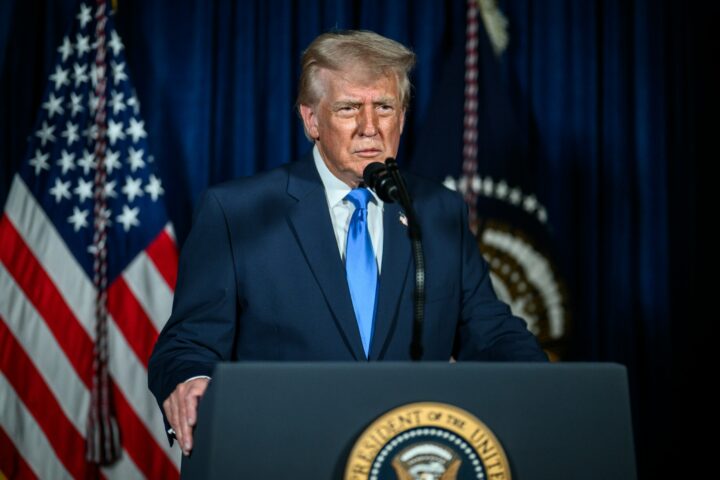
Speaking at a news conference during G7 meetings in France alongside French President Emmanuel Macron, Trump said he hoped the interim agreement would help stabilize the region and bring down oil prices. But he also warned Iran that the United States would respond forcefully if Tehran failed to comply.
“If you don’t adhere to the agreement, I don’t want to do that, but we’re going to bomb the hell out of you,” Trump said.
Energy analyst Amrita Sen, founder of Energy Aspects, said the terms released so far appear to favor Tehran.
Sen described the language in the 14-point plan as “quite favorable or heavily favorable towards Iran.” She also noted that major questions remain unresolved, including how quickly commercial vessels will be permitted to move through the Strait of Hormuz.
Under the memorandum, Iran has agreed to allow commercial ships to pass safely through the strait without tolls for the first 60 days. After that period, Tehran is expected to hold talks with Oman and other Gulf states over the future administration of maritime services in the waterway.
Iranian President Masoud Pezeshkian hailed the memorandum as a diplomatic and strategic success. In a social media post that included images of the signed document, Pezeshkian called it “a historical document and a message from a powerful Iran: Peace will be realized in the shadow of mutual respect.”
The National Iranian American Council called the memorandum “the most significant diplomatic breakthrough since the outbreak of the war” on February 28, while also warning that its future remains uncertain. The group pointed to opposition from Israel, hardliners in Washington, and conservative factions inside Iran.
Torbjorn Soltvedt, principal Middle East analyst at Verisk Maplecroft, said Iran will retain “significant leverage” as talks move toward more difficult questions involving its nuclear program, ballistic missiles, and support for armed groups across the region.
The scale of the shipping and energy disruptions over the past three and a half months, Soltvedt said, has strengthened Tehran’s hand heading into the next round of negotiations.
For now, the memorandum remains an interim step. Many of its central details, including enforcement mechanisms, shipping rules, sanctions relief, and the future of Iran’s nuclear program, are expected to be negotiated in the coming weeks.