President Donald Trump has ordered a substantial reduction in joint U.S.-South Korea military exercises, arguing that the longstanding drills are costly and unnecessarily hostile toward North Korea as he seeks to revive his relationship with North Korean leader Kim Jong Un.
The annual summer exercises, known as Ulchi Freedom Shield, began Monday, bringing together American and South Korean forces for 11 days of training designed to strengthen the allies’ ability to respond to threats on the Korean Peninsula, reported The New York Times.
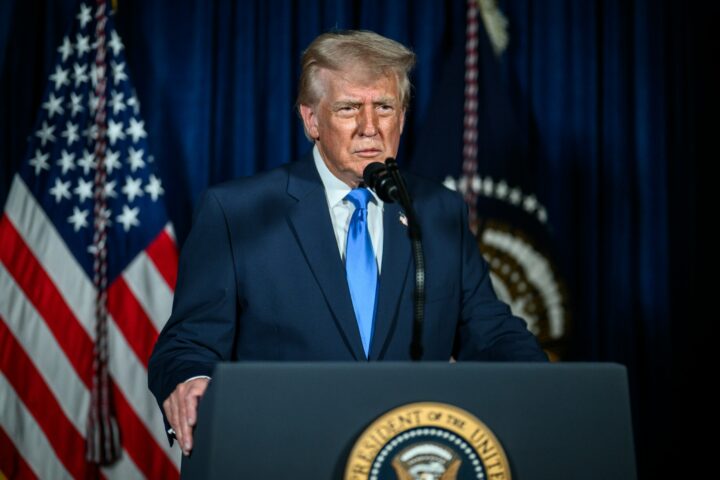
Trump announced the move shortly after the exercises began, pointing to his personal relationship with Kim and describing North Korea as “unthreatening and respectful.”
“I am not happy with the fact that the United States has, long ago, agreed to participate in Joint Military Exercises with South Korea,” he said. “Based on the fact that it is too late to cancel, I have instructed Secretary of War, Pete Hegseth, to substantially reduce the Joint Military Exercises!”
Trump also described the exercises as “not only costly” but “totally inappropriate and hostile” toward North Korea.
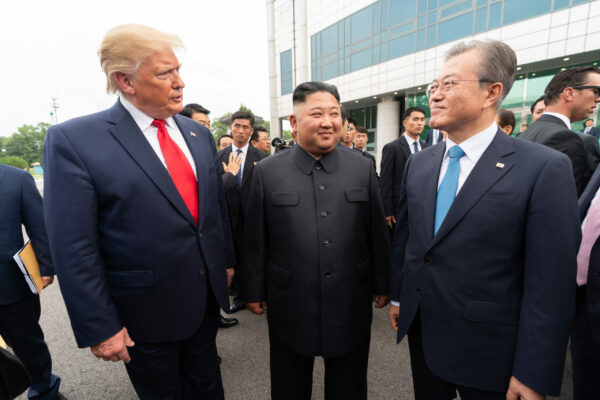
The decision marks one of Trump’s clearest efforts during his current term to reopen a diplomatic channel with Pyongyang. Over the weekend, Trump shared a 2019 photograph of himself with Kim at the inter-Korean border and wrote, “Kim Jong Un and I get along GREAT!”
The move comes as North Korea has continued expanding its nuclear and missile programs while strengthening its military relationship with Russia. Kim has signed a mutual defense treaty with Moscow, and North Korea has sent troops and weapons to assist Russia in its war against Ukraine.
Pyongyang has also repeatedly threatened South Korea and has labeled the country a “most hostile enemy.”
Trump took similar steps during his first administration, canceling or scaling back major military exercises with South Korea while pursuing negotiations with Kim. At the time, Trump called the drills “tremendously expensive” and “very provocative.”
Trump ultimately met with Kim three times, including at summits in Singapore and Vietnam and during their 2019 meeting at the Korean Demilitarized Zone. The diplomatic effort did not produce an agreement eliminating North Korea’s nuclear weapons program.
Trump has also repeatedly argued that South Korea should shoulder more of the financial burden associated with the American military presence on the peninsula.
This year’s Ulchi Freedom Shield exercises were designed in part to incorporate lessons from more recent conflicts, including the war in Ukraine, where North Korean troops have gained battlefield experience involving drones and modern combat tactics.
Lt. Gen. Joseph E. Hilbert of the U.S. Eighth Army said the exercises would test “the alliance’s ability to rapidly project combat power and secure key terrain within the First Island Chain.”
Trump’s announcement nevertheless created new uncertainty over the future of the drills and the broader military relationship between Washington and Seoul.
“South Korean conservatives, in particular, will see the alliance turning into a zombie, considerably losing its old strategic objectives and political energy under Trump,” Lee Byong-chul, an analyst at the Institute for Far Eastern Studies in Seoul told The Times.
Trump also used the same social media post to criticize South Korea for not doing more to help “denuclearize” Iran.
South Korea’s Foreign Ministry said Monday that Seoul would continue coordinating with Washington on both the military exercises and Iran policy. The government confirmed that Ulchi Freedom Shield had begun as scheduled.
South Korean President Lee Jae Myung has supported efforts to reduce tensions with North Korea and has encouraged renewed dialogue between Washington and Pyongyang. North Korea has long condemned the allied military exercises as “a rehearsal for an aggressive war.”
A renewed diplomatic push, however, would begin under substantially different circumstances from Trump’s first round of negotiations with Kim. North Korea has expanded its nuclear capabilities and strengthened its economic and diplomatic relationships with Russia and China.