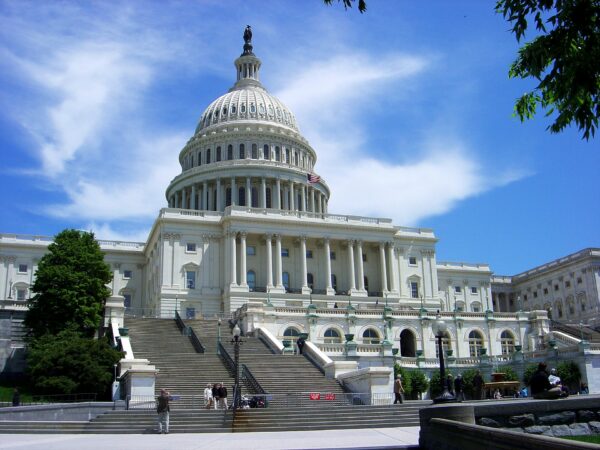
Senate Republicans reportedly hit a procedural roadblock Thursday after the Senate parliamentarian ruled that several parts of the GOP’s budget reconciliation package aimed at providing $70 billion for immigration enforcement failed to comply with Senate rules.
The ruling complicates efforts by Senate Majority Leader John Thune to move the legislation to the Senate floor next week. Republicans will now likely need to rewrite or remove portions of the package in order to preserve the simple-majority pathway offered through the reconciliation process.
At the center of the dispute is the Byrd Rule, a long-standing Senate rule designed to prevent major policy changes from being passed under reconciliation unless those changes are directly tied to the federal budget. If provisions remain in the bill that violate the Byrd Rule, the broader package could face a 60-vote threshold — a major hurdle in the narrowly divided Senate.
Democrats celebrated the ruling as an early victory in their effort to challenge the legislation line by line. Republicans, meanwhile, sought to downplay the significance of the parliamentarian’s decision, portraying it as a technical issue rather than a fundamental defeat.
Jeff Merkley, the ranking Democrat on the Senate Budget Committee, said Democrats had warned repeatedly they would scrutinize every section of the bill for compliance with reconciliation rules.
“As Senate Democrats warned time and time again, we were prepared to look at every line of this bill to ensure it was compliant with the Byrd Rule and the rules of the reconciliation process,” Merkley said in a statement.
He added that Democrats viewed the ruling as “a win for the rule of law” and argued it would help preserve protections for children held in immigration detention facilities.
One provision struck down by the parliamentarian involved funding for initial screenings of unaccompanied migrant children. According to Democrats on the Senate Budget Committee, the parliamentarian determined the proposal improperly funded activities outside the jurisdiction of the Senate Homeland Security Committee.
The ruling also found that portions of the legislation undermined protections established under the Trafficking Victims Protection Reauthorization Act, commonly known as the TVPRA.
Additionally, the parliamentarian rejected a section allocating another $2.5 billion for immigration-related provisions tied to the Homeland Security title of the 2025 One Big Beautiful Bill Act. According to the Democratic summary of the ruling, that section conflicted with both the TVPRA and the Flores Settlement Agreement.
The Flores agreement is a binding federal consent decree that sets standards governing the detention, treatment, and release of migrant minors apprehended by federal immigration authorities. The debate surrounding these protections once again highlighted the ongoing tension between stronger border enforcement efforts and longstanding legal safeguards involving children and families caught in the immigration system.
Chuck Schumer called the parliamentarian’s rulings a significant setback for Republicans and used the moment to attack the broader GOP agenda.
“Senate Republicans’ reconciliation bill tells you exactly who they’re fighting for: Trump’s raids, Trump’s violent ICE agents, and Trump’s gilded ballroom — not working families,” Schumer said.
He added that Democrats planned to continue fighting the legislation “tooth and nail.”
Republicans, however, rejected claims that the bill was in serious trouble. Ryan Wrasse, a spokesperson for Thune, argued Democrats were exaggerating the impact of the rulings.
“Despite what Budget Dems would like folks to believe, the sky is not falling,” Wrasse wrote on social platform X. “These are all technical fixes that were not unexpected.”
Wrasse added that Republicans remained committed to “fully fund Border Patrol and immigration enforcement.”
The ruling underscores the procedural battles increasingly shaping Washington’s immigration debate, where even efforts centered on border security and enforcement can become entangled in legal disputes, Senate rules, and broader political fights over the growing reach of federal immigration authority.
[READ MORE: President Trump Announces West Potomac Park as Site for National Garden of American Heroes]