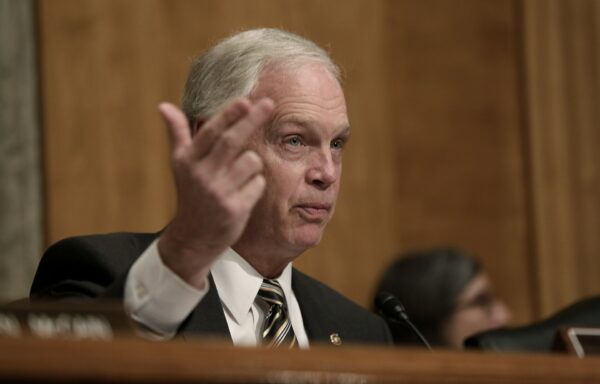
Sen. Ron Johnson is reportedly drawing a line between supporting a tough stance on Iran and endorsing threats against civilian infrastructure, signaling a notable split with President Donald Trump as tensions escalate.
Speaking on the John Solomon Reports podcast, Johnson expressed hope that the president’s recent rhetoric is more bluster than policy. “I hope and pray that President Trump is just using this as bluster,” Johnson said, adding that he does not want to see the United States “start blowing up civilian infrastructure.”
The comments reflect a broader concern among some conservatives who favor strength abroad but remain wary of actions that could broaden conflict or harm noncombatants. Johnson emphasized that, in his view, the United States is not at war with the Iranian people themselves.
“We are not at war with the Iranian people. We are trying to liberate them,” he said, drawing a distinction between civilians and the ruling structure in Iran. He argued that the conflict is instead focused on what he described as a relatively small segment of elites, including the Iranian Revolutionary Guard Corps and associated security forces.
At the same time, Johnson cautioned against underestimating the difficulty of any such effort. “They’re not going to give it up easy,” he warned, noting that he had previously predicted the situation would not be resolved quickly once hostilities began.
The senator’s remarks come amid a series of increasingly stark statements from Trump. In an Easter Sunday social media post, the president warned that “Tuesday will be Power Plant Day, and Bridge Day” in Iran, suggesting a direct focus on infrastructure targets. He paired the message with a demand that the Strait be reopened, warning of severe consequences if it was not.
The following day, Trump escalated further, declaring that “a whole civilization will die tonight, never to be brought back again,” while also stating that he did not want that outcome but believed it was likely.
For supporters of a hardline approach, such rhetoric can be interpreted as an attempt to project strength and deter adversaries. But Johnson’s response highlights a different concern—that targeting infrastructure tied to civilian life risks crossing a boundary that has long been treated with caution.
That concern has also been raised by military leaders. Last month, Wesley Clark, a former NATO Supreme Allied Commander Europe, warned that attacks on civilian infrastructure intended to pressure a government by harming the population would constitute a war crime.
The juxtaposition of Trump’s language and Johnson’s caution underscores an ongoing debate within the Republican Party and beyond. While there is agreement that Iran’s leadership presents a serious challenge, there is less consensus on how far the United States should go in confronting it.
Johnson’s framing suggests a preference for targeting those in power rather than actions that could impact the broader population. It also reflects a recognition that once conflicts expand, they can quickly become more complicated and difficult to control.
As the rhetoric intensifies, the divide may come down to a fundamental question: how to maintain a posture of strength without drifting into actions that could deepen the conflict or undermine the moral case for it.
For now, Johnson’s message is clear—support for confronting adversaries does not necessarily extend to endorsing every potential method, especially when civilians could bear the cost.
[READ MORE: Trump Warns Iran Will ‘Die’ Tonight]