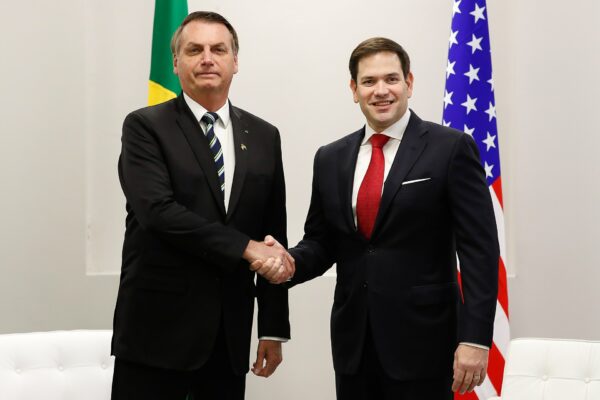
Secretary of State Marco Rubio cautioned Tuesday that negotiations aimed at ending the nearly three-month conflict with Iran may still take “a few more days,” tempering expectations of a swift breakthrough just days after President Donald Trump suggested a final agreement was close at hand.
Speaking with reporters at Jaipur International Airport in India, Rubio described ongoing discussions as heavily focused on the exact wording of an emerging agreement, with negotiators continuing to exchange proposals behind the scenes.
“There was some talks going on in Qatar today, so we’ll see if we can make progress on,” Rubio said. “I think it’s a lot of talking back and forth going on about specific language in the initial document.”
Rubio stressed that Trump would not accept an unfavorable arrangement simply to secure a quick political victory.
“He’s going to make a good deal or no deal, so on that everyone should be assured,” Rubio continued. “But that may take a little while, I mean, a few more days.”
The comments marked a more cautious tone after Trump announced Saturday that a deal to permanently end hostilities had been “largely negotiated.” According to the president, the agreement would also include reopening the Strait of Hormuz, a strategically vital shipping lane that has remained heavily restricted since fighting erupted in late February.
The ongoing disruption in the strait has rattled global energy markets for weeks. Only a limited number of ships have been able to pass safely through the narrow waterway during the conflict, contributing to instability in oil markets and raising broader concerns about the economic consequences of prolonged military escalation in the region.
One of the major unresolved issues reportedly involves billions of dollars in frozen Iranian funds. According to Reuters, the Iranian-affiliated Islamic Revolutionary Guard Corps outlet Fars News Agency reported that negotiations over releasing those assets remain a significant obstacle preventing a final agreement.
While diplomacy continues, the situation on the ground remains volatile despite a ceasefire that was enacted in early April. Hopes that the truce would stabilize the region appeared increasingly uncertain Monday after U.S. forces carried out what officials described as “defensive strikes” in southern Iran.
According to officials, the strikes targeted missile launch sites as well as Iranian boats allegedly attempting to lay mines in the Strait of Hormuz. The renewed military activity added another layer of uncertainty to already fragile negotiations and underscored how quickly tensions could spiral even as diplomats continue talking.
The latest developments also highlighted the difficult balancing act facing the Trump administration: pursuing negotiations while simultaneously responding to military threats in one of the world’s most sensitive strategic regions.
On Tuesday, Iran’s new Supreme Leader Ayatollah Mojtaba Khamenei issued a warning suggesting potential retaliation against American military installations throughout the Middle East.
“The hands of time do not turn backward,” Khamenei declared, “and the nations and lands of the region will no longer serve as shields for American bases.”
The remarks served as a reminder that despite public optimism surrounding negotiations, deep mistrust and escalating rhetoric continue to define relations between Washington and Tehran.
As negotiators work through the details of a possible agreement, the prolonged conflict has continued to weigh heavily on regional stability, global shipping, and energy markets. The repeated cycle of ceasefires, military responses, and renewed threats has also intensified concerns about how quickly limited confrontations can evolve into broader and more dangerous regional conflicts with consequences extending far beyond the Middle East.
For now, administration officials insist diplomacy remains active, but Rubio’s comments suggest any final resolution may still be farther away than many had hoped only days ago.
[READ MORE: Trump Escalates Attacks on Courts and Congress Over Delayed White House Ballroom Project]