Two Republican senators voiced concern over President Donald Trump’s renewed focus on the 2020 presidential election, arguing that the party should instead concentrate on issues voters are facing ahead of November’s midterm elections.
The comments came after Trump devoted his Thursday night prime-time address to allegations of foreign and “deep state” interference in previous U.S. elections. During the speech, the president presented declassified documents that he said supported his claims.
Critics, according to the article, have argued that Trump’s focus on past elections signals an effort to interfere in the upcoming midterms and help Republicans secure victories in November.
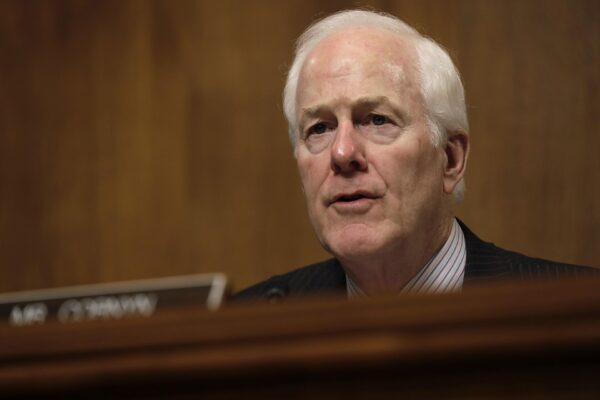
Speaking at the annual Aspen Security Forum in Colorado, Sen. John Cornyn, R-Texas, was asked by Politico’s Jonathan Martin whether Trump’s address caused him concern about the integrity of this year’s elections or the president’s intentions.
“Well, we have 109 days until the midterm elections, and I don’t understand talking about what happened six years ago in light of these upcoming elections,” Cornyn said. “And, you know, frankly, as a member of the Senate Intelligence Committee, there wasn’t a whole lot new.”
Cornyn, who recently lost his Texas Republican primary after President Trump backed another candidate, noted that presidents routinely receive classified intelligence briefings and said the information discussed during Trump’s address largely reflected longstanding concerns about foreign efforts to influence American elections.
“I mean, the president gets his president’s daily brief,” Cornyn said. “He’s entitled to classified information. Now, some of this was declassified.”
The Texas senator added that foreign adversaries have attempted to influence U.S. elections for years, pointing to Russia’s activities in 2016 and citing China, Iran, North Korea, and other nations as countries seeking to create division within the United States.
“But the bottom line is none of this would have changed the outcome,” Cornyn said. “So I don’t really, I guess I don’t get it.”
Martin followed up by asking whether Trump’s speech raised concerns about the president’s intentions regarding this fall’s elections.
Cornyn acknowledged that Republicans already face historical challenges heading into the midterms as the party holding the White House.
“Well, I think, historically, the midterms for the party in power are really tough,” Cornyn said. “So yeah, I’m concerned about it. So, we ought to be talking about things looking forward that our constituents are most concerned about.”
Sen. Bill Cassidy, R-La., also expressed concern about the direction of the party’s messaging.
Cassidy, who likewise lost his Republican primary after Trump endorsed his challenger, argued that Republicans should focus on what he described as “kitchen table” issues affecting everyday Americans.
“As a Republican, my concern is that it’s setting up a Democratic wave election,” Cassidy said. “We should be talking about what matters to the people around the kitchen table.”
He pointed to the costs of health care, housing, groceries, and gasoline, saying Republicans have policy proposals that could address those concerns.
“And so Republicans have good plans for that,” Cassidy said. “We should be talking about our plans to make life more affordable for the average American.”
Despite his concerns about the party’s messaging, Cassidy said he was not especially worried that Trump could interfere with the administration of this year’s elections.
“Our electoral system’s incredibly decentralized,” Cassidy said. “There’s not like one place where you can go and control the master election across the country.”
He explained that each state administers its own election system, with additional local systems operating within many states.
“And so, it would take a really massive effort to do that,” Cassidy said. “I’m not saying you shouldn’t be vigilant, but that is not what bubbles up to the top of my mind.”
[READ MORE: Trump Adviser Says No Evidence Foreign Powers Changed U.S. Votes as President Renews Election Security Push]