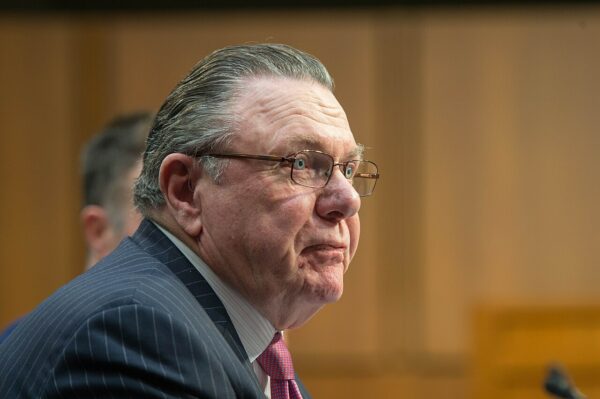
Retired Gen. Jack Keane is calling on the Trump administration to release the full memorandum of understanding signed with Iran, arguing that public debate surrounding the agreement has become dominated by speculation because key details remain hidden from view.
The agreement, announced by President Donald Trump as a framework for ending the conflict between the United States and Iran and opening negotiations over future relations, has generated intense discussion across conservative circles. While both sides have acknowledged reaching an understanding, the actual text of the memorandum has not yet been released.
That lack of transparency has left supporters and critics alike attempting to piece together the agreement from public statements and reports. Even some longtime Trump allies in conservative media have joined the calls for disclosure, including Fox News host Mark Levin, who has publicly urged the administration to make the document available.
One of the most controversial reported provisions involves a reconstruction fund that could provide Iran access to as much as $300 billion. Vice President JD Vance acknowledged Monday that Iran “could” receive such funding under certain circumstances, though he emphasized that none of the money would come from the United States.
According to public discussion surrounding the agreement, access to the funding would depend on Iran reopening the Strait of Hormuz and disposing of what Trump has described as “nuclear dust.”
Appearing Monday on “Hannity,” Keane argued that the simplest way to address the growing controversy would be to release the memorandum itself.
“I think what the president should do is just, let’s release it and let people see what’s out there so we stop debating about something none of us are seeing,” Keane said.
Host Sean Hannity responded by suggesting that the agreement’s incentives only matter if Iran follows through on its obligations. Hannity argued that if Tehran fails to comply, it would receive none of the benefits and the situation could quickly revert to where it stood before the agreement was signed.
“I want to believe that,” Keane replied, before outlining concerns he said were based on information he had heard regarding the agreement’s potential nuclear provisions.
Keane questioned whether Iran would be required to fully eliminate certain elements of its nuclear infrastructure. He specifically referenced reports suggesting nuclear material could be downblended rather than removed entirely and expressed concern that centrifuges and cascade systems could remain intact.
He argued that such an arrangement could resemble limitations established under the Joint Comprehensive Plan of Action, the Obama-era nuclear agreement that has long been criticized by many conservatives.
Beyond the nuclear provisions, Keane reserved his sharpest criticism for the reported reconstruction fund.
“And the funding is real,” he said. “There’s a $300 billion investment fund.”
While acknowledging that the money would not come from American taxpayers, Keane argued that the source of the funding was not his primary concern. Instead, he questioned whether any large-scale financial assistance should be directed toward a government that remains under the control of its current leadership.
Drawing a comparison to postwar reconstruction efforts in Germany and Japan, Keane noted that those nations had different governing circumstances at the time assistance was provided.
He argued that giving Iran access to substantial financial resources would allow its leadership to rebuild capabilities that had been diminished during the conflict.
“They shouldn’t get any of it,” Keane said. “That’s just the reality of it.”
The retired general concluded by expressing skepticism about trusting Iranian leaders to uphold their commitments, arguing that concerns over verification and enforcement remain central to the debate. As pressure grows for the administration to publish the agreement, calls for transparency appear to be coming not only from critics of the deal, but also from some of the president’s strongest supporters.
[READ MORE: Trump Tells Netanyahu To Be More Responsible]