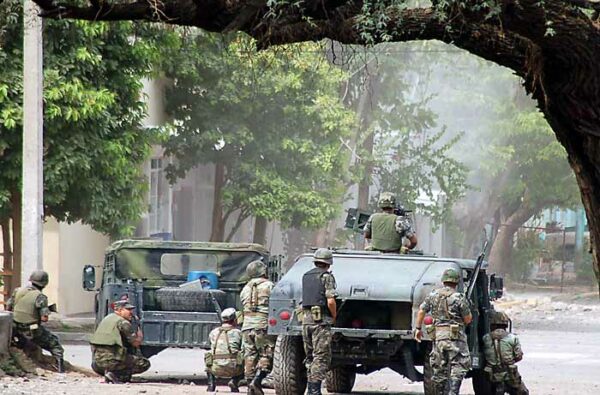
A shocking explosion on a busy highway outside Mexico City earlier this spring has reportedly cast a new light on a growing and front in the fight against cartel violence. In broad daylight, a vehicle carrying alleged Sinaloa Cartel operative Francisco Beltran — known as “El Payin” — erupted in flames, killing him and his driver instantly. The brazen nature of the March 28 attack left observers stunned, as the car continued rolling forward before drifting off the road.
While cartel violence is tragically common in Mexico, this incident stood out for its precision and sophistication. According to sources cited by CNN, the blast was not simply another chapter in cartel-on-cartel warfare, but rather a targeted assassination tied to an expanded covert campaign by the CIA. An explosive device had reportedly been planted inside the vehicle, raising serious questions about how far U.S. intelligence operations may be willing to go beyond America’s borders.
The CIA has firmly denied the reporting, calling it “false and salacious,” but multiple sources maintain that U.S. operatives have increased their role in Mexico over the past year — not just gathering intelligence, but in some cases participating directly in lethal operations. The goal, according to those familiar with the strategy, is to dismantle cartel networks from the ground up, targeting not only high-profile leaders but also mid-level figures who keep these criminal enterprises running.
That approach mirrors counterterrorism efforts used in the Middle East, where U.S. forces have long relied on targeted strikes to disrupt extremist groups. Yet applying that same playbook in Mexico, a sovereign neighbor, introduces a far more complicated set of risks — legal, political, and moral.
Mexican officials have pushed back strongly. President Claudia Sheinbaum made clear that foreign agents are not permitted to operate freely within the country, citing national security laws requiring full transparency from outside forces. “There cannot be agents from any U.S. government institution operating in the Mexican field,” she said publicly after the issue came to light.
Still, the reality on the ground appears far murkier. Sources suggest that some level of cooperation exists between U.S. and Mexican authorities, even as tensions simmer beneath the surface. In certain operations, U.S. intelligence has reportedly played a key role in locating cartel figures, though Mexican officials often emphasize that American personnel are not directly involved in combat actions.
The situation reflects a delicate balancing act. On one hand, the Trump administration has taken an aggressive stance, designating major cartels as foreign terrorist organizations and signaling a willingness to act unilaterally if necessary. On the other, Mexico faces the challenge of maintaining sovereignty while grappling with powerful criminal networks that have infiltrated parts of its own institutions.
There are also growing concerns about unintended consequences. Escalating covert operations risks provoking retaliation from cartels that operate across borders, potentially bringing violence closer to American communities. Even some former U.S. officials have warned that such efforts may be “pushing the envelope” in ways that could spiral beyond control.
In the end, the explosion that killed Beltran may represent more than a single strike against organized crime. It may signal the emergence of a shadow war — one fought quietly, without clear lines, where the pursuit of security risks opening the door to deeper instability.
[READ MORE: Gorka Weighs “Right-Wing Extremism,” Sparks Debate Over Conservatism and Free Speech]