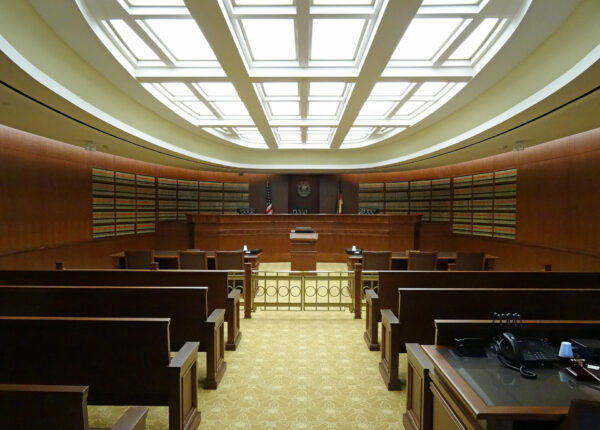
A federal appeals court appeared unlikely Sunday to immediately side with the Trump administration in its effort to segregate 20,000 California ballots it says likely came from noncitizen voters, with judges voicing doubts during a rare weekend hearing that a lower court needs to act faster.
“I don’t see how we have jurisdiction,” said U.S. Circuit Judge Mark Bennett.
The Department of Justice (DOJ) sued California earlier this month after the state rejected claims that it sent ballots to 20,000 likely noncitizens through its universal mail voting program. The DOJ wants those ballots set aside and verified before they can be counted.
The case is one of several lawsuits the administration has filed in recent weeks as the midterm elections rapidly approach.
A trial judge is scheduled to hold a hearing on Tuesday, but the DOJ argues action is needed sooner because ballots are already coming in. Court filings show Los Angeles County alone has already processed 331,000 mail ballots.
Rather than wait, the DOJ went directly to a three-judge panel on the U.S. Court of Appeals for the 9th Circuit, which agreed to convene over the weekend. Once the hearing got underway, however, the administration met a chilly reception, particularly from Bennett and U.S. Circuit Judge Gabriel Sanchez.
Bennett noted that the trial court had already given the government “essentially the timing you wanted for a hearing.”
Beyond the timing question, both Bennett and Sanchez raised concerns about the reliability of the administration’s list and whether it actually matches the one California used to send out mail ballots this election cycle.
“You were not able to explain who these third parties are that form some part in the chain of analysis over this list,” Sanchez said. “And the reliability of the list — very much — your claims very much depend on the reliability of that list.”
DOJ attorney Matthew Donnelly indicated the list was purchased from the state and supplied to the administration. To address the judges’ concerns, he pointed to sworn declarations from Department of Homeland Security officials.
Bennett was appointed by President Trump, while Sanchez was appointed by former President Biden.
The third judge on the panel, Patrick Bumatay, another Trump appointee, appeared to be the most receptive to the administration’s arguments.
Although Bumatay cautioned that court intervention could create confusion among local election officials, he pushed back on the argument that the administration’s request would unconstitutionally commandeer those officials to enforce federal regulations.
“It’s not extraordinary to ask California to verify citizenship of a voter,” Bumatay said.
Sam Siegel, representing California, disagreed.
“It is in the manner that the federal government is asking for here,” Siegel responded.
The outcome of the dispute could carry significant weight as mail ballots continue to pour in across the state. With the trial court hearing set for Tuesday, the administration’s push for faster action now rests with the appeals panel.
For now, the hearing suggested the DOJ faces an uphill climb in persuading the court to intervene before the lower court weighs in, with two of the three judges openly questioning both the court’s jurisdiction and the strength of the government’s evidence.
[READ MORE: VA Official Eyes Psychedelic Drugs for Up to 2.1 Million Veterans with PTSD, Depression]