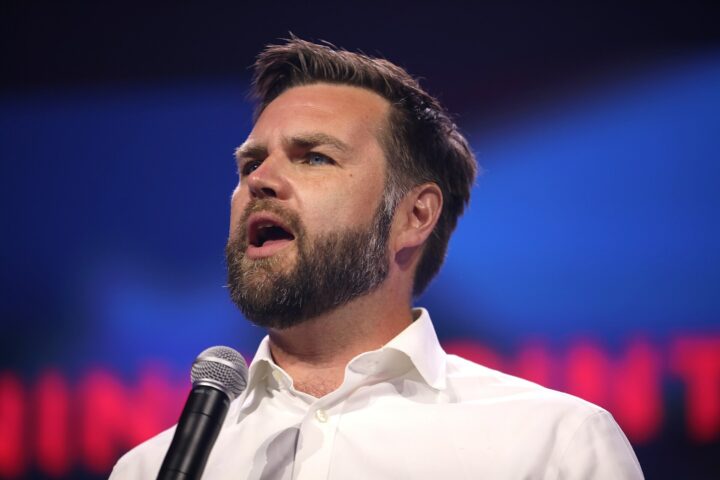
Vice President Vance is now reportedly headed back to his home state of Ohio last week to hold a rally and cast his early ballot, as Republicans find themselves locked in Senate and gubernatorial races that many in the national political press have viewed as unexpectedly difficult.
But the tight contests may not be as surprising as they seem.
The marquee race is for the Senate seat Vance vacated to become President Trump’s second-in-command. Republican Jon Husted, who was serving as Ohio’s lieutenant governor at the time, was appointed to the seat last year.
Husted brings a long political résumé. He served as Speaker of the Ohio House and won statewide races for secretary of state in 2010 and 2014 before running for governor in 2018. Though he lost that primary, he joined the ticket of the winner, Mike DeWine, and the pair won two very successful campaigns together.
In many respects, Husted is the opposite of Vance. He is viewed in both Columbus and Washington as a party loyalist, a relentless campaigner, a political professional and something of a dealmaker, with a team featuring several John Boehner alumni. In a good year for a generic Ohio Republican, Husted would be the ideal candidate.
But this is not shaping up to be a good year for Republicans in Ohio, or in most places Trump carried by less than 15 points in 2024.
That was the year Husted’s Democratic opponent, Sherrod Brown, lost Ohio’s other Senate seat to Republican Bernie Moreno. Moreno, like Vance, ran as a MAGA outsider and rode Trump’s coattails to beat Brown by just under 4 points.
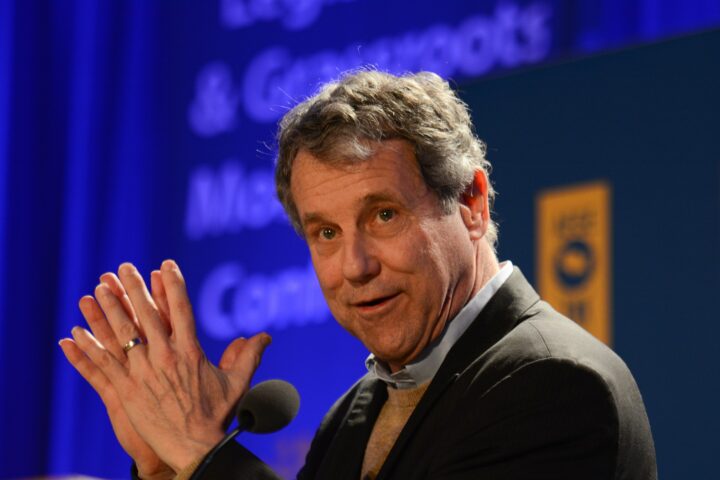
Brown, known for his everyman image, has a résumé much like Husted’s, including a long statehouse career and two terms as Ohio secretary of state. His first three Senate campaigns, in 2006, 2012 and 2018, all came in strong years for Ohio Democrats. But in 2024, as Trump won the state by the widest margin of any presidential candidate since Ronald Reagan, Brown fell short. Polls that year showed his early lead slipping away in the fall, and he ultimately ran just 3 points ahead of then-Vice President Kamala Harris.
Republicans argue that 2024, and especially the 2022 midterm in which Vance defeated longtime Democratic Rep. Tim Ryan by 6 points, prove Ohio is now solidly red.
Democrats counter that the state remains politically flexible, believing its many white, working-class voters have been voting their values more than their pocketbooks. Husted’s campaign and its allies have focused heavily on transgender issues.
With voters overwhelmingly focused on the economy in 2026, Brown appears well positioned for a comeback. This time, he is the one gaining ground. Since June, no legitimate poll has shown Husted ahead, and two recent high-quality surveys put Brown at 49 percent.
Still, the race is far from over. Husted will almost certainly outperform his recent polling, and statewide Republicans in Ohio appear to have a floor of roughly 47 percent, close enough to capitalize on any late shifts.
Meanwhile, early voting is underway. Ohio set records for preelection voting in its past two midterms, and late deciders are now casting ballots. With Ohio’s status as the heartland of the new working-class Republican Party on the line, the GOP is running short on time.
[READ MORE: Trump Asks Kimberly Guilfoyle To Quit]